Leak Detection Services in Lynnwood
Water leaks hide in different places, and each location calls for a different approach. Use this page to match your symptoms to the right service and understand how the testing works.
Which service fits your problem?
Start with the symptom you can see. If you are unsure, call and describe it. Many investigations begin with a general check of the whole system and narrow down from there.
| What you notice | Likely area | Service |
|---|---|---|
| Warm spot on a tile or concrete floor, water heater running often | Hot water line under a slab | Slab leak detection |
| Wet or extra-green strip in the yard, meter moving, low pressure | Buried service line between meter and house | Water line leak detection |
| High bill or moving meter but nothing visible | Anywhere: crawl space, under floors, in walls, a toilet | Hidden water leak detection |
| Stain on a ceiling, damp drywall, loose tile near a shower | Supply or drain line in a wall or ceiling | Wall & ceiling leak detection |
| Water coming through from a neighbor's unit, rental or HOA question | Shared walls, stacked plumbing | Residential & condo leak detection |
| Water spreading right now, burst pipe, sagging ceiling | Any pressurized line | Emergency leak detection |
| Loose tile, stain below a bathroom, water around a toilet | Shower valve, pan, drain, grout | Shower & bathroom leak detection |
| Musty smell, wet insulation, water under the house | Crawl space supply or drain lines | Crawl space leak detection |
| Hissing in a wall, pinholes, a pipe that froze | Supply pipes in walls, floors, ceilings | Pipe leak detection |
| Puddle around the water heater, dripping relief valve | Heater connections, valves or tank | Water heater leak detection |
| Pool or hot tub losing water faster than evaporation | Shell, fittings, equipment, buried lines | Pool & spa leak detection |
| Soggy lawn, weak sprinkler zone, meter runs after watering | Sprinkler valves, heads, lateral lines | Irrigation leak detection |
| Office, store, restaurant or apartment building leak | Risers, sub-metered units, service lines | Commercial leak detection |
Leak detection methods and when they're used
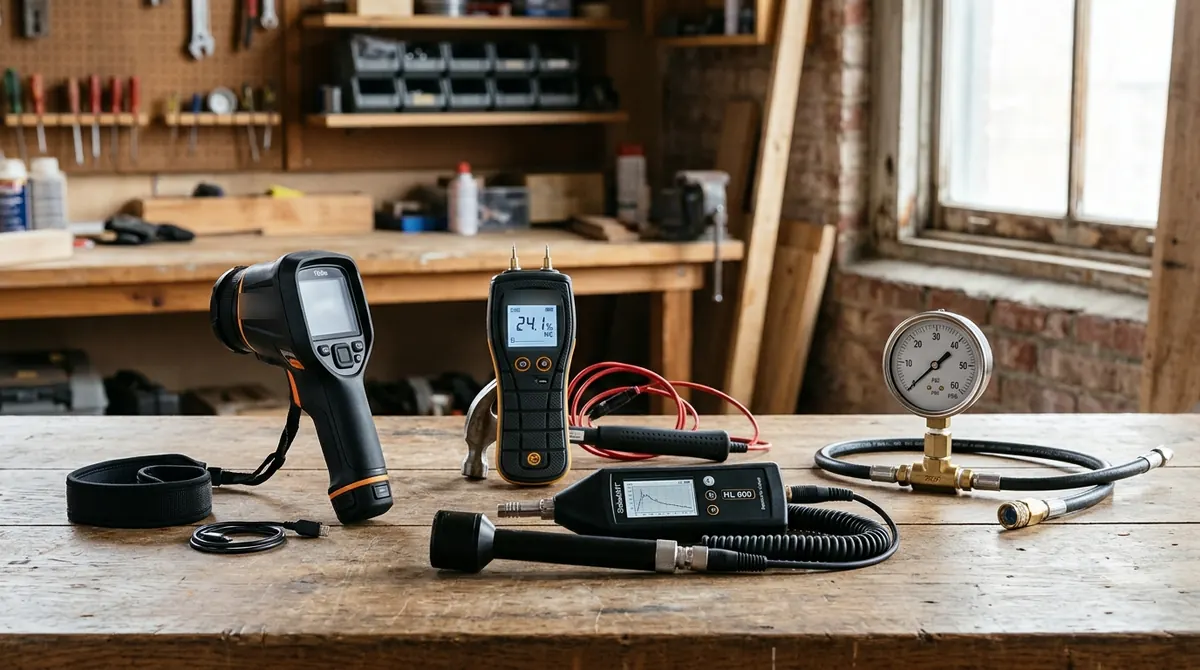
Good leak detection relies on more than one method. Each tool answers a different question, and readings are cross-checked before a location is marked.
Meter and pressure testing
The first question is whether there is a leak at all, and on which line. With every fixture off, the water meter shows whether water is still flowing. Pressure tests then isolate sections of plumbing (hot side, cold side, the buried service line) to see which one loses pressure.
Acoustic listening
Water forced out of a small hole in a pressurized pipe makes noise. Ground microphones and contact sensors amplify that sound so the technician can follow it to the loudest point. Background noise, pipe material, depth and soil type all affect how clearly a leak can be heard.
Thermal imaging
Infrared cameras show surface temperature, not water. They are most useful for hot water leaks under slabs and for spotting cool, wet patches on walls and ceilings. Results depend on temperature differences, so a thermal image is treated as one clue among several.
Line tracing
Before you can listen along a buried or under-slab pipe, you need to know where it runs. Electronic locators trace metal pipes; plastic lines may need other techniques, such as a tracer wire or a transmitter inserted into the line.
Moisture mapping
Moisture meters measure how wet drywall, wood and subflooring are. Mapping readings across a wall or floor shows how far water has spread and often points toward the source.
Tracer gas
For some hard-to-hear leaks, a line is drained and filled with a safe, non-toxic gas mix that escapes at the leak and is picked up by a sensor at the surface. Not every provider offers this, so ask if your case calls for it.
Detection is not repair
Leak detection answers one question: where is the water escaping? Fixing it is a separate job. Some providers handle both. Others locate and mark the leak so your plumber can make a targeted repair. Ask which applies when you call, and get repair pricing separately.
Testing is done from the surface. Whether a repair needs an opening depends on where the leak is, what the building is made of and how the pipes are routed. Nobody can promise that every leak can be found or fixed without cutting into something.
What affects the cost of leak detection
- Number of lines to test. Checking one line is quicker than isolating a whole house.
- Access. Low crawl spaces, finished basements, deep or long service lines and pipes under thick slabs take longer.
- Property size and type. A condo with stacked plumbing is different from a single-family home on a large lot.
- Methods needed. Specialized methods like tracer gas take more time and equipment.
- Timing. Urgent or after-hours visits may cost more.
Ask for the price, what's included and what isn't before booking. Our FAQ covers other common questions.
Services not listed here
Leak repair is not offered through this website; once a leak is located, you can use any plumber you choose. Roof leaks are usually a job for a roofing contractor rather than a plumbing leak specialist. If you smell gas, leave the building and call 911 or your gas utility from outside.
Think you have a hidden leak?
Call and describe the symptoms. You will get straight answers about what testing involves and what it may cost before anyone visits.