Pipe Leak Detection in Lynnwood, WA
Supply pipes rarely fail all at once. Most leaks start as a pinhole, a weeping joint or a hairline split, and the water travels before it shows. Locating the exact spot keeps the repair to one short section of pipe.
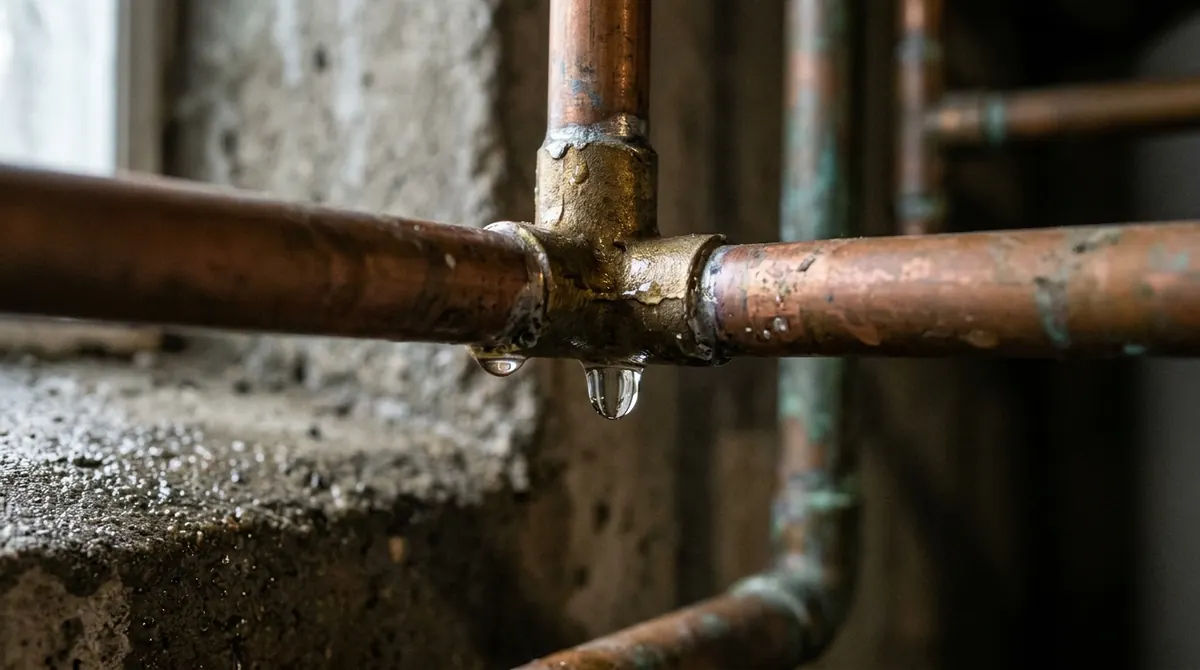
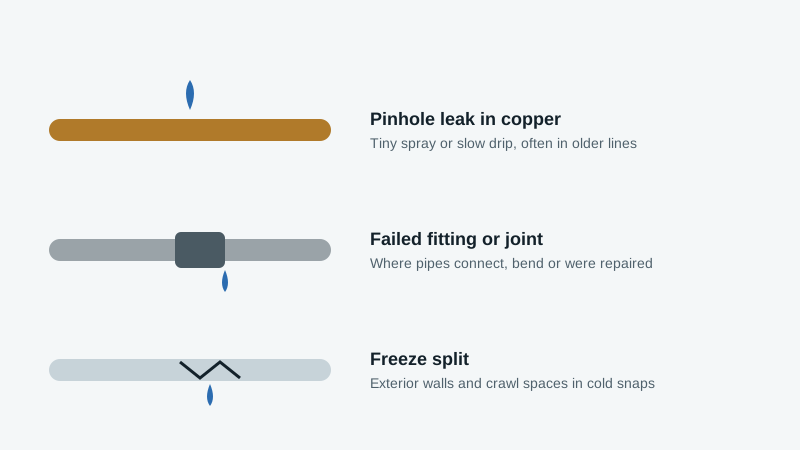
- Common pipe leaks: pinholes in copper, failed fittings and joints, and splits from freezing.
- Pressure tests confirm which line leaks; acoustic listening and thermal imaging find where.
- Pipe material matters: plastic lines carry leak sounds less clearly than metal.
- One pinhole can mean others; ask about the condition of the whole line.
- If a pipe has burst, shut off the main valve first.
Last reviewed October 26, 2026
Signs of a leaking pipe
- Hissing or trickling inside a wall or floor when no fixture is on.
- Meter moving with everything off.
- Damp drywall, stains or bubbling paint along a pipe route.
- Drop in water pressure at one or more fixtures.
- Green or white crust on visible copper fittings.
- Warm patch on a wall or floor along a hot water line.
Common causes
| Cause | What it looks like |
|---|---|
| Pinhole corrosion | Tiny spray or slow drip in copper; can repeat on the same line |
| Failed fitting or joint | Weeping at elbows, tees, valves or old repairs |
| Freeze damage | Split pipe in an exterior wall, garage or crawl space; leaks when it thaws |
| Abrasion or vibration | Wear where a pipe rubs a stud, strap or concrete |
| High water pressure | Stress on joints and appliance connections over time |
| Nail or screw puncture | Leak after hanging shelves, trim or cabinets |
How a pipe leak is located
Confirm
Meter checks and pressure tests on hot and cold sides show which line is losing water.
Trace
The likely route of the pipe through walls, floors or the crawl space is worked out.
Listen and scan
Acoustic sensors pick up escaping water; thermal imaging helps on hot lines and wet areas.
Mark
The location is marked and explained so the opening for repair can be small.
Pipe material and accuracy
Metal pipes like copper carry the sound of a leak well. Plastic lines (PEX, CPVC, polybutylene) are quieter, so the search may lean more on pressure isolation, moisture mapping and thermal imaging. Knowing what your home has, if you do, helps plan the visit.
Detection versus repair
Once the leak is marked, a plumber can repair the section, replace a fitting, or recommend re-routing or re-piping if the line has several weak spots. Repairs are priced separately from detection.
What to do when you find a wet spot
A damp patch on a wall, ceiling or floor does not always mean the pipe behind it is the source, since water travels. Before anything is opened:
- Stop the spread. If water is spreading, shut off the main valve and put towels or a bucket under the drip.
- Take photos. The size and shape of the stain, and any change over hours, help show whether the leak is active.
- Note what was running. A spot that grows when a fixture runs points to a drain; one that grows all the time points to a supply line.
- Check the meter. A moving meter with everything off confirms a supply leak. Our meter check guide shows how.
What affects the cost
Cost depends on how many lines must be isolated, how easy access is — an open wall, a crawl space or a slab line are very different jobs — whether the pipe is metal or quiet plastic, and whether the visit is urgent. Detection is priced separately from the repair itself.
Pipe leaks in Lynnwood homes
Lynnwood homes range from older houses with copper or galvanized lines to newer townhomes and condos plumbed with PEX. Copper lines tend to develop pinhole leaks over time, older galvanized pipe can corrode from the inside, and any material can split if it freezes in an exterior wall, garage or crawl space during a Snohomish County cold snap.
If you know what your pipes are made of, mention it when you call, since it changes which tools work best. If a pipe has burst, shut off the main first and see emergency leak detection. For a slow leak in ZIP 98036, 98037 or 98087, start with leak detection in Lynnwood.
Pipe leak questions
Why do copper pipes get pinholes?
Causes include water chemistry, high velocity or pressure, and the age and quality of the pipe. One pinhole can be a sign the line is wearing out.
How do I prevent frozen pipes?
In cold snaps, insulate exposed pipes, keep garage and crawl space vents managed, disconnect hoses, and let a faucet on an exterior wall drip slightly.
Will the wall have to be opened?
For the repair, usually a small opening at the marked spot. Testing itself is done from the surface.
Should I replace the whole line after one pinhole?
Not always. A single pinhole on an otherwise sound line can be repaired. Ask about the condition of the whole line: several pinholes, or corrosion along its length, suggest wider wear and a re-route or re-pipe may make more sense.
Can a pipe leak hide for months?
Yes. A slow weep inside a wall or under a floor can soak materials for months before a stain appears. A creeping water bill, a musty smell or a stain that keeps growing are the usual first signs.
Does a pipe leak always raise the water bill?
A supply-line leak usually does, since it draws water all the time. A drain leak only loses water while fixtures run, so the bill effect is smaller. Another common cause of a high bill is a toilet that runs constantly.
Related services
See wall and ceiling leak detection, slab leak detection, emergency leak detection or the home page.
Think you have a hidden leak?
Call and describe the symptoms. You will get straight answers about what testing involves and what it may cost before anyone visits.