Residential Leak Detection for Lynnwood Homes, Condos and Rentals
Who to call, who pays and how fast to act depend on what kind of home you're in. Here's how leak detection works for houses, townhomes, condos and rental properties.
- Houses, townhomes, condos and rentals each handle leaks and responsibility differently.
- In condos, the source is often in the unit above or a shared riser.
- Notify the HOA or landlord in writing and document damage with dated photos.
- Leak detection gives owners, managers and insurers a clear answer on the source.
- Testing another unit's fixtures needs that owner's permission.
Last reviewed October 22, 2026

The City of Lynnwood's comprehensive plan counts roughly half of the city's homes as single-family houses and most of the rest in buildings with two or more units (2013 figures). Leaks behave differently in each. In a house, the owner controls the whole system. In a condo or apartment, water can cross from one unit to another and responsibility is shared.
Single-family houses and townhomes
The City notes that much of Lynnwood's building stock dates from the 1960s and 1970s. Homes of that age may still have original supply lines, older fittings or past repairs that are reaching the end of their life. Common leak locations:
- Crawl space supply and drain lines, see hidden leak detection
- Under-slab lines in townhomes and additions, see slab leak detection
- The buried service line in the yard, see water line leak detection
- Bathroom walls and ceilings, see wall and ceiling leak detection
Condos and stacked units
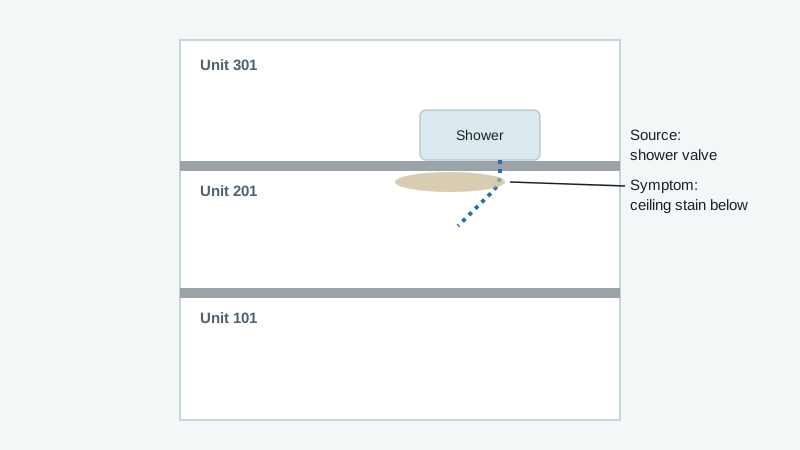
When water shows up in your unit, the source is often above or beside it. Typical sources are a shower valve or drain in the unit above, a washing machine hose, a dishwasher or refrigerator line, or a shared riser pipe.
What to do
- Stop the water if you can. Knock on the upstairs door. If the leak is serious and nobody answers, contact building management or the HOA.
- Document it. Take dated photos of the stain, any dripping, and damaged belongings.
- Notify the HOA or property manager in writing. Your association's governing documents usually say who handles leaks from shared pipes versus unit fixtures.
- Find the source. Leak detection gives everyone, including insurers, a clear answer on where the water came from.
Testing a neighbor's fixtures requires their permission. Coordinating through the HOA or property manager usually makes this faster.
Rental properties
For tenants, the first step is usually to tell the landlord or property manager right away, in writing, and follow the lease. For landlords, a confirmed leak location helps you schedule the right trade, document the repair and request a utility leak adjustment if the bill was affected. If a property is between tenants, a vacant unit's meter can be watched to check for leaks before move-in.
What to expect during the visit
- Questions about the symptoms, when they started and any past plumbing work.
- Access to the main shut-off valve, the water heater, and the crawl space or attic if relevant.
- Testing from the surface: meter checks, pressure tests, moisture readings, thermal imaging and acoustic listening as needed.
- An explanation of where the leak is likely located and what kind of repair it may need.
Leak detection for Lynnwood homes, condos and rentals
Lynnwood has a wide mix of housing: single-family houses in South Lynnwood, Meadowdale and the College District, townhomes near Alderwood, and a growing number of apartments and condos around the City Center light rail station, which opened in 2024. Each type tends to leak in its own way. Houses often have crawl space and yard service line leaks, while stacked units more often have leaks between floors and in shared pipes.
Owners, HOA boards, tenants and property managers in ZIP codes 98036, 98037 and 98087 can all call. For rentals, the landlord or manager should authorize the visit. For the full list of services, start with leak detection in Lynnwood, or check the service area page for nearby communities such as Alderwood Manor and Martha Lake.
Residential leak questions
Who pays for leak detection in a condo?
It depends on your HOA's governing documents and where the leak turns out to be. Many associations treat shared pipes differently from a unit's own fixtures. Check your documents and ask your insurer.
I rent. Can I call leak detection myself?
Tell your landlord or property manager first. They are usually responsible for plumbing repairs and need to authorize work on the property.
Do you work with property managers?
Property managers and HOA boards can call to request leak detection for a unit or building. Ask about scheduling and access when you call.
Think you have a hidden leak?
Call and describe the symptoms. You will get straight answers about what testing involves and what it may cost before anyone visits.