Water Heater Leak Detection in Lynnwood
Water near a water heater doesn't always mean the tank is failing. It can be a loose connection, a relief valve doing its job, a drain valve, or a leak somewhere else that just runs to the low spot.
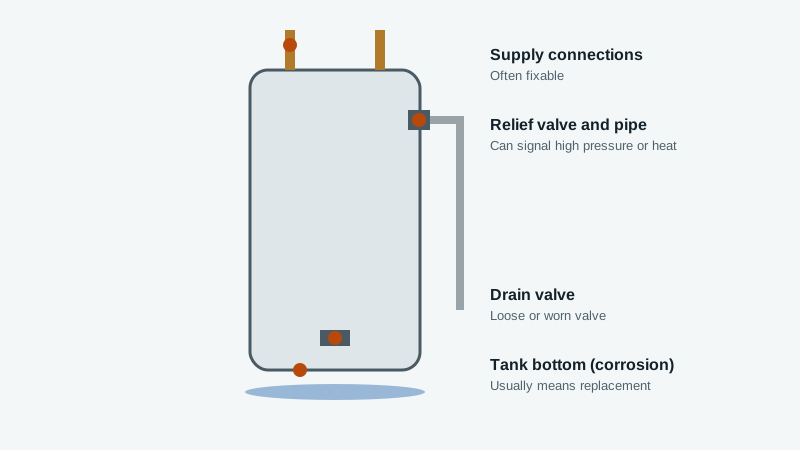
- Common leak points: supply connections, the temperature and pressure (T&P) relief valve, the drain valve, and the tank.
- A leak from the tank body usually means replacement; connection and valve leaks are often repairable.
- A relief valve that discharges can signal too much heat or pressure; don't cap or plug it.
- Water under the heater may come from another line or appliance nearby.
- For a gas water heater, if you smell gas leave the building and call 911 or the gas utility from outside.
Last reviewed November 21, 2026
Signs of a water heater leak
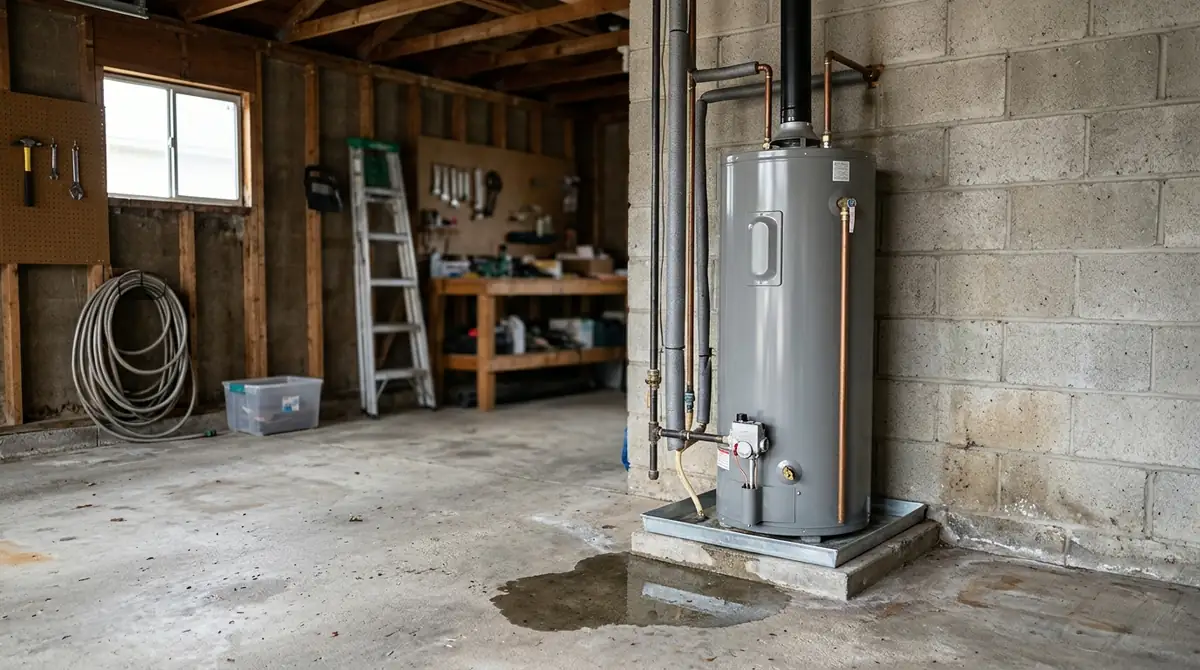
- Puddle or rust stain under or around the tank.
- Water dripping from the relief valve discharge pipe.
- Damp insulation or corrosion on the pipes at the top.
- Running out of hot water sooner than before.
- Rumbling or popping sounds along with moisture.
What each leak point usually means
| Where | Common cause | Typical next step |
|---|---|---|
| Supply connections on top | Loose or corroded fittings, worn connectors | Tighten or replace connectors |
| T&P relief valve or its pipe | Valve worn, or excess temperature or pressure | Have the valve and system pressure checked |
| Drain valve near the bottom | Valve not fully closed or worn | Close, cap or replace the valve |
| Tank body or bottom | Internal corrosion | Usually replace the water heater |
| Nowhere on the heater | Another line, appliance or floor drain | Wider leak detection |
How the source is confirmed
Dry and watch
The area is dried and each connection is checked with the system pressurized to see where water reappears.
Check the relief valve
Discharge is noted along with signs of high pressure. Testing pressure at a fixture helps.
Rule out other sources
Nearby supply lines, the washer, a floor drain or a slab line are checked if the heater itself is dry.
What a specialist does on a water heater leak visit
When the source is obvious — a dripping drain valve, a wet relief pipe, a rusted tank — you can go straight to a plumber. A leak detection visit is for the cases where the heater looks dry but water keeps showing up, or where the water could be coming from a hidden pipe. A typical visit includes:
- Dry-and-watch testing. The area is dried and each connection is checked with the system pressurized, to see exactly where water reappears first.
- Relief valve and pressure checks. Discharge from the relief pipe is noted, and pressure is tested at a fixture to see whether high pressure is behind it.
- Moisture meters and thermal imaging. These trace water that has travelled along the floor or inside a wall, so a leak behind the heater is not mistaken for a heater leak.
- Acoustic listening. A pressurized pipe leak makes a sound a listening device can pick up, even through a floor or wall.
- A meter test. With all water off in the house, a moving meter leak indicator confirms water is escaping somewhere, and closing the heater's supply valve shows whether the heater is the source or a hidden line is.
You get a clear answer — drain valve, relief valve, connection, condensation, tank failure, or a hidden pipe somewhere else — and the right next step: a plumber, a water heater installer, or nobody at all. Leak detection does not include the repair or the replacement itself. Our guide on a water heater leaking from the bottom walks through the same checks you can do first.
Safety first
Turn off the power (electric) or set the gas control to "pilot" or "off" (gas), and close the cold water supply valve at the top of the heater. Never plug or cap a relief valve. If you smell gas, leave and call 911 or your gas utility from outside.
When a water heater leak is an emergency
Not every puddle is an emergency, but some are. Treat it as urgent — shut off the water and the heater today — if any of these apply:
- Water is spreading. A puddle that grows, runs across the floor, or soaks into drywall, flooring or stored items needs the cold water supply shut off now, before the damage spreads.
- The tank itself is seeping. Water coming from the tank body or bottom seam, especially with rust-colored water, means the tank has corroded through. A leaking tank can fail suddenly and release its full contents.
- Hot water is involved. Water from the tank or the relief valve can be hot enough to scald. Keep away from it and do not step in standing water near electrics.
- You smell gas. Near a gas water heater, a gas smell is an emergency on its own. Leave the building and call 911 or your gas utility from outside. Do not touch the controls or any switches.
A slow drip from a drain valve or a connection, or a relief valve that releases water now and then, is not an emergency in the same way, but it should still be looked at soon. It wastes water and can damage the floor and framing around the heater over time. If the leak is active and you cannot find the source, our emergency leak detection service covers active leaks in Lynnwood.
Detection versus replacement
Leak detection tells you whether the heater is leaking and from where. Replacing a water heater or valve is a plumbing job; in Washington, water heater replacement generally needs a permit, so ask your plumber.
What to check before you call
These details help narrow down the source on the first call:
- Where the water is. Under the tank, at a pipe on top, from the relief valve pipe, or just nearby on the floor.
- When it appears. All the time, only after hot water use, or only when the heater runs.
- The heater's age. The rating label on the tank shows the manufacture date. Age alone does not prove the tank is the source, but it helps.
- Hot water supply. Whether you run out of hot water sooner than before, which can point to a tank problem.
What affects the cost
Detection cost depends on how many possible sources must be ruled out and how easy access is. It is priced separately from any valve or heater replacement. If the tank itself is leaking, replacement is usually the recommendation, and in Washington water heater replacement generally needs a permit, so ask your plumber about that cost too.
Gas water heater leaking from the bottom
On a gas water heater, water at the base is often condensation, not a failed tank. Burning gas makes water vapor, and when the tank is full of cold water that vapor turns back into water on the cold metal and drips onto the burner — sometimes with a sizzling sound while the heater is firing. Condensation usually shows up when the burner is running, after heavy hot water use, on a brand new heater, or in cold weather, and it should stop once the whole tank is hot.
The overnight pilot test tells condensation from a real leak: dry everything, set the gas control to PILOT, wait about eight hours without using hot water, and check again. If the floor stays dry, the water was condensation. If water is back and the drain valve, relief valve drip tube and top connections are dry, the tank itself is probably leaking. Our guide on a gas water heater leaking from the bottom walks through the test step by step, and the main guide on a water heater leaking from the bottom covers the same checks for gas and electric heaters together.
Water heater leaking in a Lynnwood home?
In Lynnwood, tank water heaters are usually in a garage, a utility closet or a crawl space, and a water heater leaking from the bottom is often noticed only after water spreads across the garage floor. Before calling, check whether the water is coming from the tank itself, the drain valve, the relief valve discharge pipe or the supply connections on top. Our guides on a water heater leaking from the bottom and a relief valve leaking walk through each check.
A heater that runs when no one is using hot water can also point to a hot-side slab or pipe leak elsewhere. That is when leak detection in Lynnwood helps find where the hot water is going.
Water heater leak questions
Can a leaking tank be repaired?
A leak from the tank body usually can't be repaired reliably. Leaks at connections and valves often can.
Is a dripping relief valve dangerous?
It's doing its job of releasing pressure or heat, but it means something should be checked. Don't block it.
Why is there water under the heater but the tank looks dry?
Water runs to low spots. It may come from a nearby pipe, appliance, or a slab line. See hidden water leak detection.
Should I turn off my water heater if it is leaking?
Close the cold water supply valve at the top of the heater, and turn off the power (electric) or set the gas control to "pilot" or "off" (gas). If there is standing water near electrics, do not step in it. Never plug or cap a relief valve.
How long does a tank water heater usually last?
Many tank heaters last around 8 to 12 years, depending on water quality and maintenance. Age alone does not prove the tank is leaking — connections and valves fail at any age — but an old tank with a body leak is usually replaced, not repaired.
Can a water heater leak raise my water bill?
Yes. A steady leak keeps drawing replacement water, and a relief valve that discharges regularly adds up too. If your bill jumped and the heater area is wet, check the meter with the heater's supply valve closed.
My gas water heater is leaking from the bottom — what should I do first?
First make it safe: turn the gas control to OFF or PILOT and close the cold water valve if water is spreading. Then check from the top down — the connections, the relief valve drip tube and the drain valve. If they are dry, run the overnight pilot test to rule out condensation. Our gas water heater guide walks through the test. If you smell gas, leave the building and call 911 or your gas utility from outside.
Is a hot water tank leaking from the bottom an emergency?
It is urgent if water is spreading, the tank itself is seeping, or the water is hot enough to scald — shut off the water and the heater today. A slow drip from a valve or connection is not an emergency but should be looked at soon. A gas smell near a gas heater is always an emergency: leave and call 911 or your gas utility from outside.
How can you tell if the tank is leaking or just a valve?
If the drain valve, relief valve pipe and top connections are all dry and water still seeps from the base or bottom seam, often with rust stains, the tank has usually corroded through. A valve leak shows water at the valve itself. On a gas heater, the overnight pilot test rules out condensation first. When the heater looks dry but water keeps returning, a detection visit with moisture meters, thermal imaging and a meter test can confirm which it is.
Do you replace water heaters?
No. Leak detection finds where the water is coming from; replacing a water heater or a valve is a plumbing job. In Washington, water heater replacement generally needs a permit, so ask your plumber.
Related services
See pipe leak detection, slab leak detection or the home page.
Related guide: Water heater leaking from the bottom? Causes and next steps.
Gas heater guide: Gas water heater leaking from the bottom? What to check.
Think you have a hidden leak?
Call and describe the symptoms. You will get straight answers about what testing involves and what it may cost before anyone visits.