Pool and Spa Leak Detection in Lynnwood
Every pool loses some water to evaporation. When the level drops faster than that, water is escaping through the shell, a fitting, the equipment or the buried plumbing, and each needs a different test.
- The bucket test compares evaporation with real water loss over 24 hours.
- Loss mainly while the pump runs points to pressure-side plumbing; loss with the pump off points to the shell or suction side.
- Common leak points: skimmers, returns, lights, main drains, equipment and buried lines.
- Dye testing, pressure testing and acoustic listening locate the leak without draining the pool.
- Hot tubs are tested the same way, with extra focus on jets, heaters and pump seals.
Last reviewed October 26, 2026
How to do the bucket test
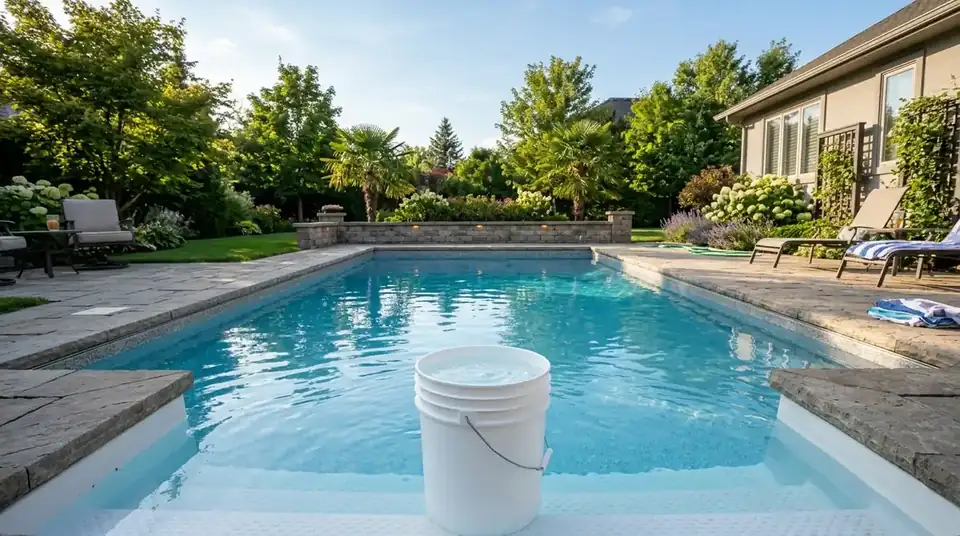
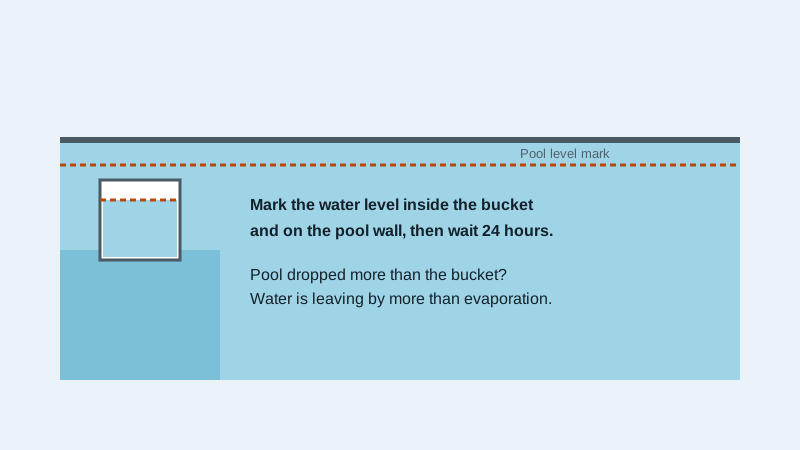
- Fill a bucket with pool water and set it on a pool step so the water levels inside and outside are about the same.
- Mark the water level inside the bucket and on the outside of the bucket (the pool level).
- Run the pump as usual and leave it for 24 hours. Don't add water or use the pool.
- Compare. If the pool dropped noticeably more than the water in the bucket, you likely have a leak.
- Repeat once with the pump off. The difference helps narrow down where the leak is.
Signs of a pool or spa leak
- Adding water more often than usual.
- Wet or soft ground, or settling, around the pool or equipment pad.
- Cracks or loose tile in the shell or coping.
- Air bubbles in the return lines or the pump losing prime.
- Higher water bill or a meter that runs when the autofill is on.
- Chemicals that won't stay balanced because fresh water keeps being added.
Where pools and spas leak
| Area | Examples |
|---|---|
| Shell and surface | Cracks, failed tile line, liner tears |
| Fittings | Skimmer throats, return fittings, light niches, main drain |
| Plumbing | Buried suction and return lines between pool and equipment |
| Equipment | Pump seals, filter, heater, valves and unions |
| Spa specifics | Jets, cover-less evaporation, heater and pump connections |
How the leak is located
Confirm loss
Bucket test results and pump-on/pump-off comparison.
Dye test
Dye is released near fittings and cracks underwater to see if it is drawn in.
Pressure test
Each line is isolated and pressurized to see which one fails.
Listen
Acoustic equipment narrows down a leak on a buried line before digging.
Detection versus repair
Leak detection finds and marks the leak. Patching a crack, replacing a fitting or repairing a buried line is a separate job, often done by a pool contractor.
Pool or spa: what changes in testing
Spas are tested the same way as pools, with a few extra suspects. Jets and their plumbing, the spa heater and pump seals, and the shared equipment when a pool and spa run on one system all get checked. Covers matter too: an uncovered spa loses more water to evaporation, which makes the bucket test even more useful, because it measures your pool's actual evaporation instead of a guess.
An autofill can hide a leak for a long time. If the autofill runs often, or the water bill climbs even though the level looks steady, the pool may be losing water as fast as it is replaced. Turning the autofill off for the bucket test makes the loss visible.
What affects the cost
Cost depends on the size of the pool, how many lines need pressure testing, how easy the equipment pad is to reach, and whether a buried line needs tracing. Testing is priced separately from patching a crack, replacing a fitting or repairing a buried line, which is usually a pool contractor's job.
Pool and spa leaks in the Lynnwood area
Pools and hot tubs around Lynnwood lose water to evaporation, splash-out and heavy use, so the first step is telling normal loss from a leak. A simple bucket test over a day or two, with the pump running as usual, gives a fair comparison. Our rainy months can hide a leak by topping the water up, so it is worth testing in a dry spell.
Outdoor spas are also exposed to winter freezes, and lines that split in the cold may leak only once the system runs again in spring. For yard lines and sprinklers, see irrigation leak detection, or start with leak detection in Lynnwood.
Pool and spa questions
How much water loss is normal?
It depends on weather, sun, wind and whether the pool is covered. The bucket test is more reliable than a fixed number because it measures your conditions.
Does the pool need to be drained?
Usually no. Most testing is done with the pool full.
Can a pool leak raise my water bill?
Yes, especially with an autofill. See our leak adjustment guide for bill relief rules.
How long does pool leak detection take?
Often a few hours. Bucket test results, the number of lines to pressure test and any buried-line tracing all affect timing. Ask for a time estimate when you book.
Can a pool leak wait until the end of the season?
Waiting usually costs more water and chemicals, and a leak can soften ground or let a crack grow. A small shell or fitting leak found early is cheaper to fix than one left running.
Will testing damage my pool finish?
No. Dye, pressure and acoustic testing are non-invasive, and the pool stays full. No draining is usually needed.
Related services
See irrigation leak detection, water line leak detection or the home page.
Think you have a hidden leak?
Call and describe the symptoms. You will get straight answers about what testing involves and what it may cost before anyone visits.