Commercial Leak Detection in Lynnwood
In a commercial or multi-unit building, a leak affects tenants, inventory and operating hours. The aim is to find the source quickly and with as little disruption as possible, then document it for owners, managers and insurers.
- Covers offices, retail, restaurants, apartment and condo buildings, and mixed-use properties.
- Work is planned around tenants and business hours; access to several units may be needed.
- Sub-meters, building valves and riser shut-offs are used to isolate the leaking section.
- Findings are documented for property managers, HOAs and insurers.
- Lynnwood's City Center and Highway 99 corridor are planned for mixed-use and multifamily growth.
Last reviewed October 26, 2026
Common commercial leak situations
- Unexplained jump in the building's water use or a sub-meter reading.
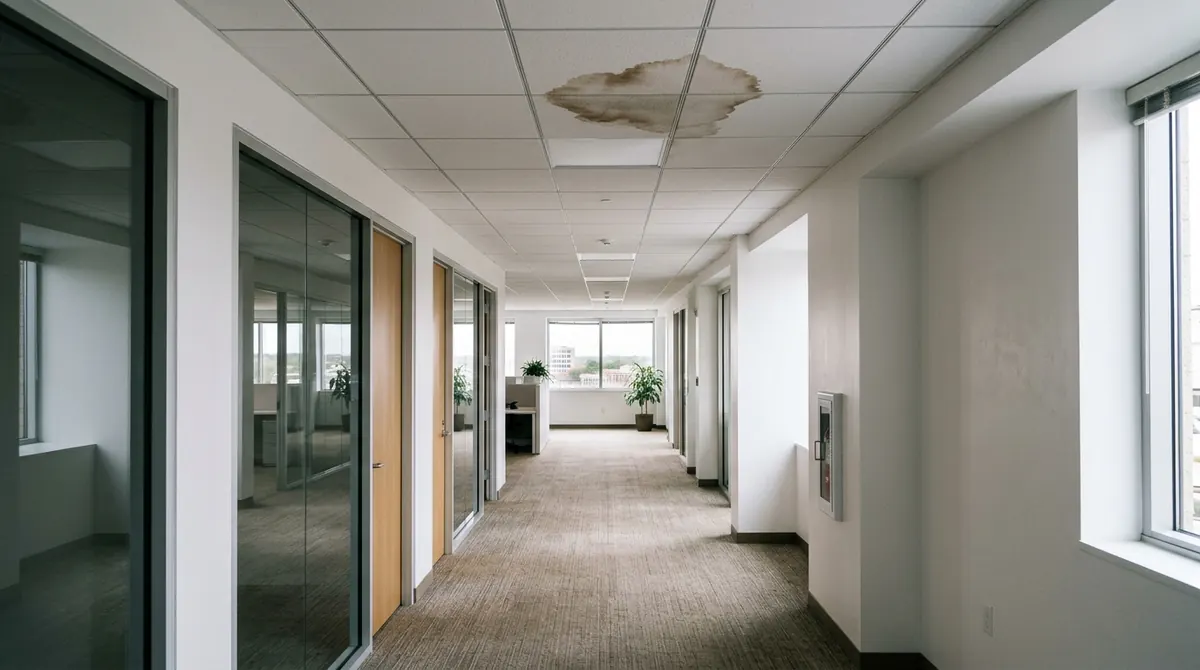
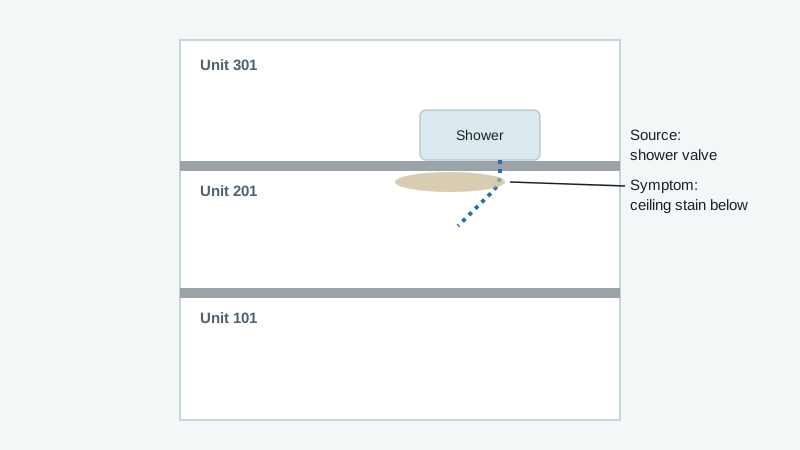
- Ceiling stains in a tenant space below restrooms or a kitchen.
- Water in a ground-floor unit or parking garage with no obvious source.
- Restaurant kitchen leaks from sinks, dishwashers, ice machines or floor drains.
- Riser or main line leaks affecting several units at once.
- Underground service line leaks on larger lots.
How a commercial leak is investigated
Plan access
The building manager coordinates access to units, mechanical rooms and shut-offs, and agrees on timing.
Isolate
Building valves, risers and sub-meters narrow the leak to a floor, stack or unit.
Pinpoint
Moisture mapping, thermal imaging, acoustic listening and pressure tests locate the source.
Document
Findings are recorded with photos and locations for owners, tenants and insurers.
Keeping disruption low
Testing is done from the surface where possible. Shut-offs are kept as short as the investigation allows, and work in occupied spaces can often be scheduled early or after hours. Ask about timing when you call.
Who is responsible?
Responsibility depends on leases, HOA governing documents and where the leak is. A clear, documented source helps owners, tenants and insurers settle that quickly. For individual condos and rentals, see residential and condo leak detection.
Detection versus repair
Leak detection locates the leak. Repairs, restoration and drying are separate jobs, often by different contractors.
What to have ready before the visit
Commercial investigations go faster when the building manager can answer a few questions on the first call:
- Access. Which units, mechanical rooms and shut-offs can be entered, and when tenants are least affected.
- Meter and sub-meter readings. Recent readings, and whether the jump is building-wide or limited to one floor or stack.
- History. Past leaks, repairs and any plumbing work in the affected area.
- Responsibility. Who pays for detection and repair under the lease or HOA documents, so the visit is not delayed by a dispute.
What affects the cost of commercial leak detection
Commercial jobs vary more than single-home jobs. The main cost factors are the size of the building, how many floors and units need checking, how easy access is, whether work must happen outside business hours, and how much documentation is needed for owners or insurers. Ask for the price before booking, and confirm whether it covers the report. Detection is priced separately from repair and restoration.
Commercial leak detection along Lynnwood's business areas
Lynnwood's commercial properties are concentrated along the Highway 99 corridor, around Alderwood and in the growing City Center area near the light rail station. Common jobs include retail units with a rising water bill, restaurants with leaks under floors and multi-unit buildings with leaks between tenants. Building managers usually need the leak located with as little disruption to tenants and opening hours as possible.
Tell us the property type, which meter or account shows the loss and any access limits when you call (425) 276-0836. For apartment and condo buildings, also see residential and condo leak detection, or go to leak detection in Lynnwood.
Commercial leak questions
Can testing happen outside business hours?
Often yes. Ask when you call so the visit can be planned around tenants and operations.
Do you need access to every unit?
Not always. Isolation at risers and floor valves narrows it down first, so only the units that matter need to be entered.
Can you help with a high building water bill?
Yes. Comparing meter and sub-meter readings with fixtures off is the first step. See our leak adjustment guide for utility rules.
Do you work with property managers and HOAs?
Yes. The building manager usually coordinates access, and findings are documented so they can be shared with owners, HOA boards and insurers.
What documentation do we get after the visit?
The marked leak location and written findings, with photos where they help, so owners, tenants and insurers can see what was found and where.
Can a leak in one unit affect the whole building?
Yes. A riser or main line leak can show up several units away or on a lower floor. Isolation at risers and floor valves narrows it to a floor, stack or unit before anyone's space is opened.
Related services
See water line leak detection, emergency leak detection or the home page.
Think you have a hidden leak?
Call and describe the symptoms. You will get straight answers about what testing involves and what it may cost before anyone visits.