Slab Leak Detection in Lynnwood, WA
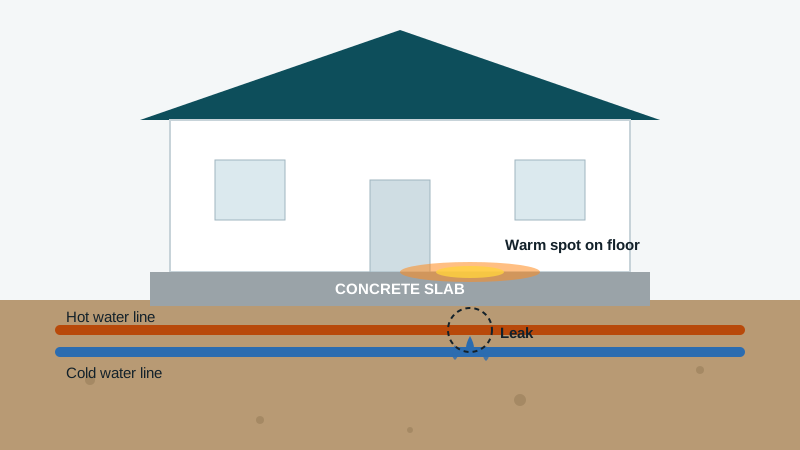
A slab leak is a break in a water line that runs in or under a concrete floor. It can run for weeks before anyone notices. Locating it accurately is what keeps the repair small.
- A slab leak is a leaking water line in or under a concrete floor.
- Main signs: a warm spot on the floor, a water heater that runs constantly, a moving meter, damp flooring.
- It is located by pressure testing, tracing the line, then acoustic and thermal checks before anything is marked.
- Detection does not include repair; options after locating are spot repair, re-route or re-pipe.
- If the floor is hot or water comes up, shut off the main valve first.
Last reviewed October 22, 2026
What is a slab leak?
In homes built on a concrete slab, water supply lines often run underneath or inside the concrete. When one of those pipes develops a pinhole, cracks or a failed joint, water escapes into the soil or gravel below the slab. Because the leak is out of sight, the first signs are usually indirect: a rising water bill, a warm patch of floor or a water heater that seems to run all the time.
Many older houses in Lynnwood sit over crawl spaces, where leaks are easier to see. Slab construction is more common in some newer townhomes, ground-floor condos and additions. If you're not sure what your home sits on, check whether you have a crawl space access hatch or a basement. If you have neither, the ground floor is likely a slab.
Signs of a slab leak
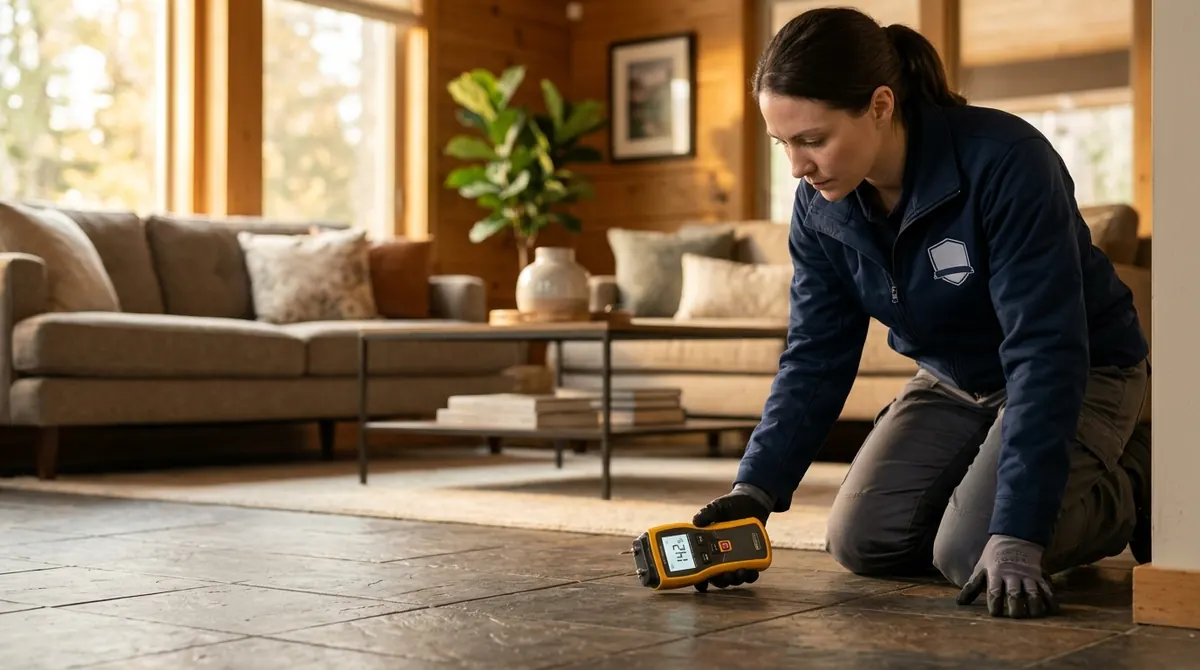
- Warm or hot spot on the floor, often noticed barefoot on tile, vinyl or concrete. This points to a hot water line.
- Water heater running more than usual, or hot water running out faster.
- Water meter moving with all fixtures and appliances off.
- Damp carpet, warped flooring or a musty smell with no spill or fixture nearby.
- Sound of running water under the floor when nothing is on.
- New cracks in tile or flooring together with the signs above. Cracks alone have many causes.
What causes slab leaks?
- Pipe age and material. Copper can develop pinholes over time; older or lower-quality fittings can fail.
- Abrasion. Pipes that expand and contract against concrete, gravel or rebar can wear through.
- Water chemistry and high pressure. Both can speed up wear on pipes and joints.
- Installation issues. Kinked or poorly bedded lines, or damage during construction.
- Ground movement. Settling soil can stress lines that pass through or under the slab.
How a slab leak is located
Confirm
A meter check and pressure tests on the hot and cold sides confirm there's a leak and which line it's on.
Trace
The route of the leaking line under the slab is traced so the search follows the pipe, not guesses.
Pinpoint
Acoustic sensors listen along the route. On hot lines, thermal imaging can show heat spreading through the concrete.
Mark
The likely leak point is marked on the floor and explained, with notes for whoever does the repair.

What affects accuracy
Slab leaks are among the harder leaks to pinpoint. Thick concrete, carpet and pad, background noise from appliances or traffic, plastic pipe that carries sound poorly and very small leaks can all make detection slower. A careful technician uses more than one method to confirm a location before recommending that anyone break concrete.
Repair options after the leak is found
Once the leak is located, a plumber will usually suggest one of these:
| Option | What it involves | When it's considered |
|---|---|---|
| Spot repair | Opening the slab at the marked point and repairing the pipe. | A single leak on otherwise sound pipe. |
| Re-route | Abandoning the leaking section and running a new line through walls or the attic. | Hard-to-reach leaks, or to avoid breaking flooring. |
| Re-pipe | Replacing larger parts of the system. | Several leaks, or pipes in poor condition throughout. |
Leak detection itself does not include repair unless your provider tells you otherwise. Get a separate repair estimate.
What to do right now
Shut off the main water valve. If the leak seems to be on the hot side, turning off the cold-water supply to the water heater limits the flow until the leak is located. Keep pets and children away from wet areas near outlets.
Slab leaks in Lynnwood homes
Slab leaks in Lynnwood usually show up in townhomes and newer houses built on concrete, such as the townhome rows around Alderwood and the City Center area, rather than in the older crawl space houses common in South Lynnwood and Meadowdale. If your home sits on a slab in ZIP 98036, 98037 or 98087 and you notice a warm spot on the floor or a water heater that runs when nobody is using hot water, a slab leak test is worth booking before the concrete is opened.
After a confirmed leak is repaired, Lynnwood water customers may qualify for a bill credit from the City of Lynnwood or the Alderwood Water & Wastewater District. Our leak adjustment guide explains how. For other kinds of leak detection in Lynnwood, see the home page or check the service area page.
Slab leak questions
How long does slab leak detection take?
Many slab leak investigations take a few hours. Complex layouts, multiple leaks or quiet leaks can take longer. Ask for a time estimate when you book.
Can a slab leak damage my foundation?
Water escaping under a slab over a long period can wash out soil or keep it saturated, which can contribute to settling or cracking. Finding the leak early limits how much water gets under the floor.
Does homeowners insurance cover slab leaks?
It depends on your policy. Some cover the cost of accessing and repairing the pipe, or the resulting water damage, but not the pipe itself. Call your insurer and keep records of the leak detection findings and repair invoices.
What does slab leak detection cost?
Cost depends on the size of the home, how many lines need testing and how hard the leak is to hear. Ask for the price before the visit. Repairs are priced separately.
Related services
If the leak turns out to be outside the house, see water line leak detection. If you only know the bill is high, start with hidden water leak detection.
Think you have a hidden leak?
Call and describe the symptoms. You will get straight answers about what testing involves and what it may cost before anyone visits.