Crawl Space Leak Detection in Lynnwood
Many Lynnwood houses sit over crawl spaces, where a slow drip can soak insulation and joists for months before anyone looks. Finding it means separating plumbing water from Pacific Northwest groundwater.
- Crawl spaces hide supply and drain leaks that never show inside the house.
- A meter test tells you if a pressurized line is leaking; drain leaks only show when fixtures are used.
- Water that appears only after rain is usually groundwater or drainage, not plumbing.
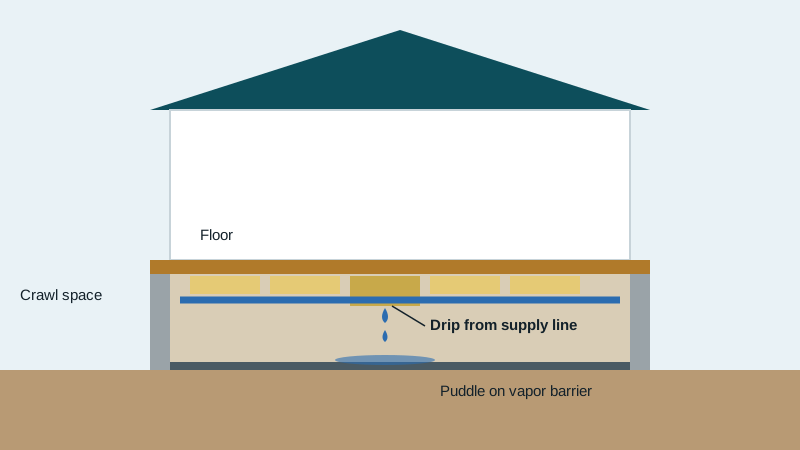
- Wet insulation hanging below a bathroom or kitchen is a strong plumbing clue.
- Crawl spaces can be tight and dirty; the technician needs a clear path to the access hatch.
Last reviewed October 26, 2026
Signs of a crawl space leak
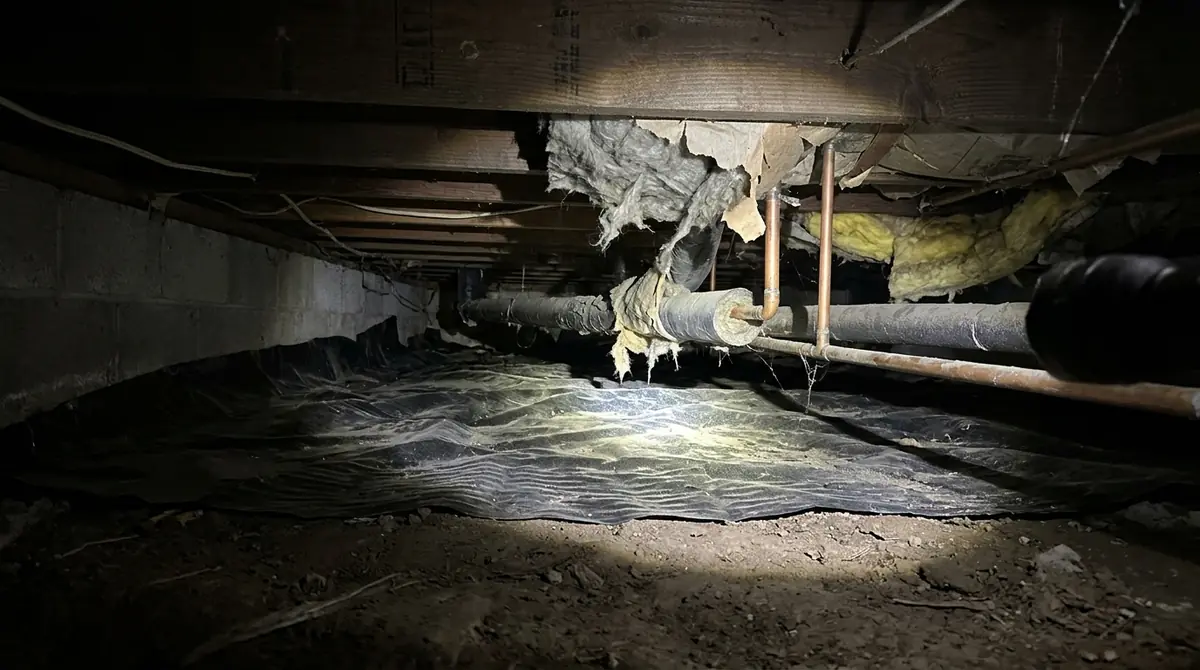
- Musty smell coming up through floors or heat registers.
- Higher water bill or a meter that moves with everything off.
- Soft, cupped or squeaky floors near a bathroom or kitchen.
- Standing water on the vapor barrier in dry weather.
- Sagging or dripping insulation under the floor.
- Rising humidity or condensation on windows.
Plumbing leak or groundwater?
| What you see | More likely |
|---|---|
| Water appears in a dry stretch; meter moves with everything off | Supply line leak |
| Wet spot below a bathroom or kitchen that grows when fixtures run | Drain line leak |
| Water along the foundation walls after heavy rain | Groundwater or surface drainage |
| Damp everywhere, no pooling, sweating pipes | Humidity and ventilation |
In the wet season it can be both at once. That's why testing the plumbing directly matters more than looking at how wet the crawl space is. See our guide why is my basement leaking water.
How a crawl space leak is found
Meter test
Confirms whether any pressurized line is leaking and roughly how fast.
Visual survey
Supply lines, drains, the water heater line and the main entry are checked for drips, stains and corrosion.
Drain test
Fixtures above are run one at a time while the area below is watched.
Pinpoint
Moisture readings and acoustic listening narrow down hidden leaks above insulation or inside floor framing.
What makes it harder
Low clearance, insulation covering the pipes, standing water, and pipes boxed into floor joists can limit what can be seen. Clearing the path to the access hatch and telling the technician about any past plumbing work helps.
Detection versus repair
Leak detection locates and documents the leak. Repairing the pipe, replacing wet insulation, and fixing drainage or vapor barriers are separate jobs, often done by different trades.
What to do before the visit
A few steps help the technician and keep the visit short:
- Clear the hatch path. Move stored items away from the crawl space access so the technician can get in with tools.
- Note when the water appears. After rain, only when fixtures run, or all the time — each pattern points to a different cause.
- Check the meter. If the meter moves with everything off, a supply line is leaking. Our meter check guide shows how.
- Mention past work. Any plumbing repair, remodel or drainage change in the area helps narrow the search.
Crawl space leaks and your water bill
A slow supply-line drip under the floor can run for months, and the extra usage shows up as a bill that creeps up without any change in habits. Drain leaks, by contrast, only lose water while fixtures run, so the bill effect is smaller. If a supply leak is found and repaired, the City of Lynnwood and the Alderwood Water & Wastewater District both offer leak adjustments that may credit part of a high bill. See our leak adjustment guide for the rules.
Crawl space leaks in Lynnwood houses
Many older single-family houses in South Lynnwood, Meadowdale and the College District sit over crawl spaces, and that is where supply and drain leaks hide longest. Our long wet season makes it hard to tell a plumbing leak from groundwater: standing water after heavy rain points to drainage, while a wet spot under a bathroom or kitchen that stays wet in dry weather points to plumbing.
A quick meter test separates the two for supply lines. Drain leaks only show while fixtures run, so note when the wet area grows. For a full comparison, read why is my basement leaking water, or start with leak detection in Lynnwood.
Crawl space questions
Is a little water in the crawl space normal?
Some moisture is common in the Northwest, but standing water, wet insulation or a musty smell should be checked, especially if your water bill went up.
Can a crawl space leak cause mold?
Yes. Wood and insulation that stay wet can grow mold. Fixing the leak and drying the space limits it.
Do I need to be home?
Usually yes, to open the access hatch and the main valve, and so fixtures can be run during testing.
Should I fix drainage before checking for a plumbing leak?
Test the plumbing first. If the meter moves with everything off, a supply line is leaking, and drainage work will not fix it. If water only appears after rain, drainage is the likelier cause.
How often should a crawl space be checked?
Look at least once a season, and after heavy rain. Check sooner if you notice a musty smell, soft floors or a water bill that keeps climbing.
Can a crawl space leak go unnoticed for months?
Yes. A slow drip soaks insulation and joists out of sight. Musty smells, sagging insulation, soft floors and a creeping water bill are the usual first signs.
Related services
See hidden water leak detection, pipe leak detection or the Lynnwood leak detection home page.
Think you have a hidden leak?
Call and describe the symptoms. You will get straight answers about what testing involves and what it may cost before anyone visits.