Wall and Ceiling Leak Detection in Lynnwood
Water travels along framing, pipes and drywall before it shows up as a stain, so the spot you see is often not where the leak is. Tracing it back is what avoids opening the wrong wall.
- A stain often appears away from the actual leak; water travels along framing and pipes.
- Moisture mapping and fixture testing show whether it is a supply line, drain, shower or rain.
- Stains that grow only after rain usually point to the roof or exterior, not plumbing.
- Testing is done from the surface; a confirmed location keeps any opening small.
- A sagging, wet ceiling can fall: keep people out and shut off the water.
Last reviewed October 22, 2026
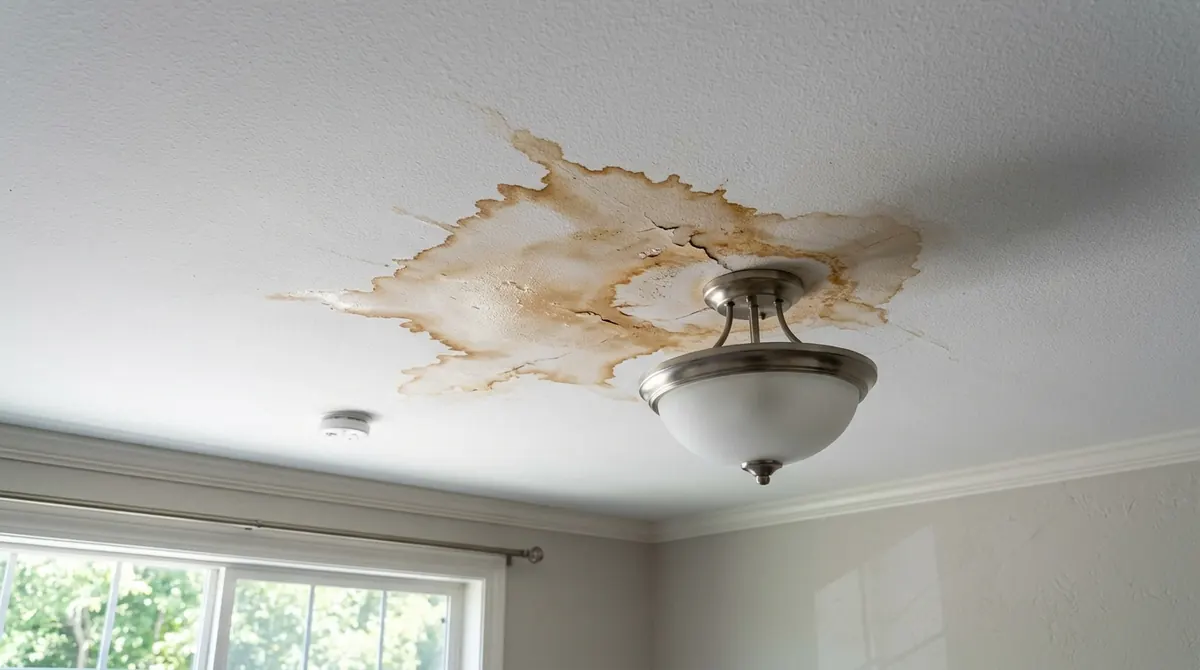
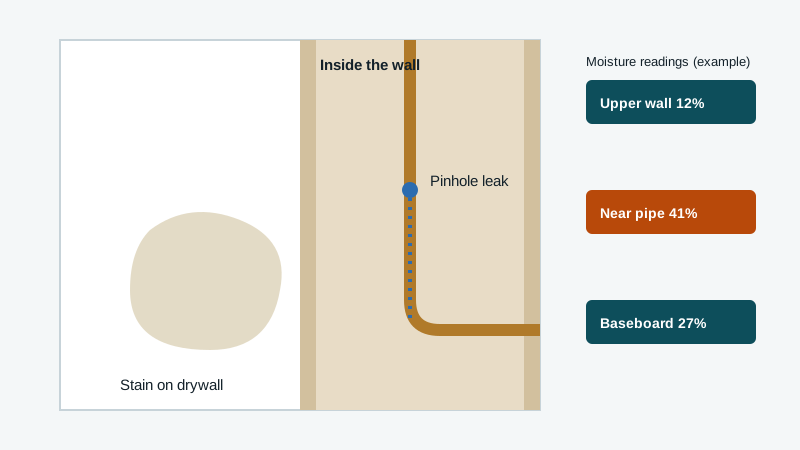
Signs of a leak in a wall or ceiling
- Yellow or brown rings on the ceiling, often below a bathroom or kitchen.
- Bubbling, peeling or soft paint and drywall.
- Swollen baseboards or warped trim near a wall.
- Loose or cracked tile, or failing grout around a tub or shower.
- Musty odor or visible mold in one area.
- Dripping or hissing sounds inside a wall.
Plumbing leak or something else?
Not every stain is a plumbing leak. Narrowing down the type of water is the first step:
| Pattern | Possible source |
|---|---|
| Gets worse when a shower or tub is used upstairs | Shower valve, drain, pan, or failed grout and caulk |
| Grows steadily regardless of water use | Pressurized supply line leak |
| Appears after heavy rain, on an exterior wall or top-floor ceiling | Roof, window, siding or flashing (a roofing or envelope issue) |
| Shows up in cold weather near windows or in bathrooms | Condensation from humidity |
Plumbing leak detection covers the first two. For rain-related leaks, a roofer or building envelope contractor is usually the right call.
How a wall or ceiling leak is traced
Map moisture
Moisture meters take readings across the stained area and nearby walls to find where it's wettest.
Scan
Thermal imaging can show the shape of wet areas behind drywall and how water is moving.
Test fixtures
Showers, tubs and drains above are run one at a time to see what makes the wet area grow.
Test lines
Supply lines are pressure-tested and listened to if a constant leak is suspected.
Showers and tubs
Bathrooms cause many wall and ceiling leaks. Water can escape through cracked grout, failed caulk, a leaking valve behind the trim plate, a loose drain connection or a damaged shower pan. Each has a different fix, so testing them separately matters before tile is removed.
About opening the wall
Testing is done from the surface. If a repair needs access, a confirmed location keeps the opening small, often a single section of drywall or an access panel behind a vanity. Ask what will be opened, by whom, and who handles patching before the repair starts.
A ceiling bulging with water can fall. Keep people out of the room, shut off the main water valve, and turn off power to lights and outlets in that area before doing anything else.
Wall and ceiling leaks in Lynnwood buildings
In Lynnwood, wall and ceiling leaks follow the housing type. In the apartment and condo buildings around City Center, Alderwood and the Highway 99 corridor, a ceiling stain often comes from the unit above, a shared riser or a shower pan on the next floor. In split-level and two-story houses in South Lynnwood and Meadowdale, the usual suspects are an upstairs bathroom, a supply line in an exterior wall or a hose bib line that froze in a cold snap.
Our wet season also brings roof and window leaks that look like plumbing stains. This service handles plumbing leaks only, so a test that rules plumbing out is still useful before you call a roofer. Learn more about leak detection in Lynnwood or see how condo and residential leak detection handles unit-to-unit leaks.
Wall and ceiling leak questions
Can mold grow from a slow wall leak?
Yes. Drywall and wood that stay damp can grow mold. Fixing the leak and drying the area quickly limits it. Large or persistent mold may need a remediation specialist.
The stain is on my ceiling but my upstairs neighbor owns that bathroom. What now?
See residential and condo leak detection for how unit-to-unit leaks are usually handled.
Should I paint over the stain?
Not until the leak is found and the area is dry. Painting hides the warning sign without stopping the water.
Think you have a hidden leak?
Call and describe the symptoms. You will get straight answers about what testing involves and what it may cost before anyone visits.