Why Is My Basement Leaking Water?
Water in a basement or crawl space can come from pipes, from the ground or from the air. Each has a different fix, so the first job is figuring out which one you have.
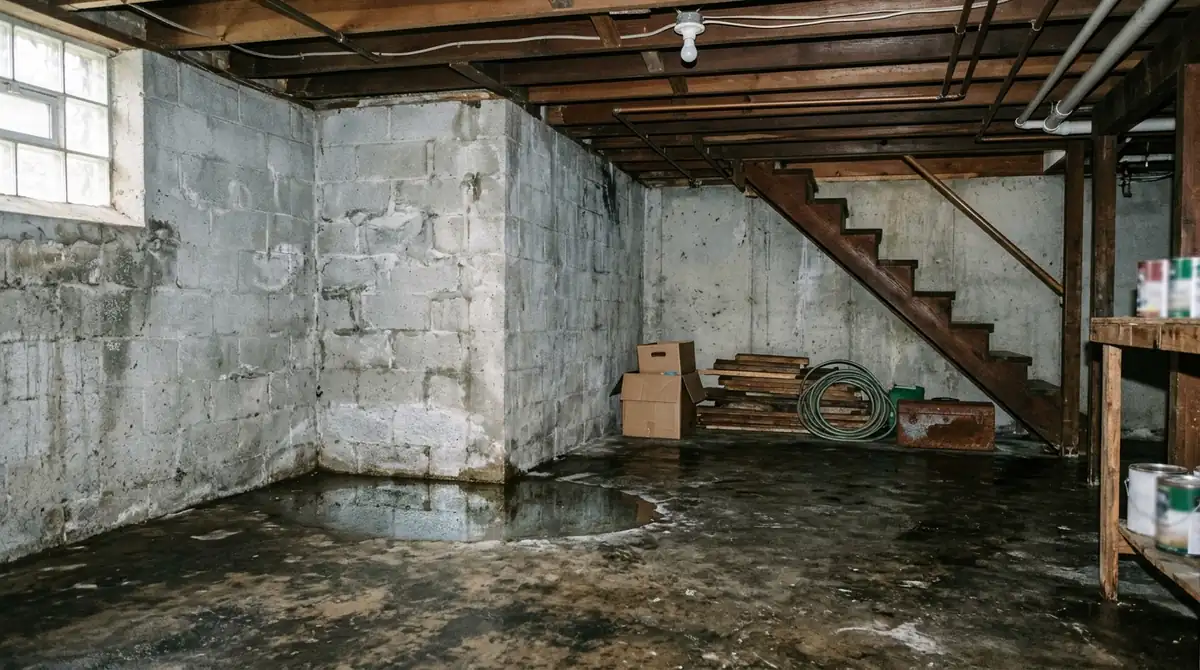
The short answer: most basement and crawl space water in Lynnwood comes from one of three places. Rainwater and groundwater push in through foundation walls, cracks and the joint where the floor meets the wall. Plumbing leaks come from supply pipes, drains or the water heater. Condensation forms on cool concrete and cold water pipes in humid weather. If water shows up after heavy rain, look outside first. If it shows up in dry weather or your water meter moves with everything off, look at the plumbing.
The three main sources
| Source | Typical clues | Who usually fixes it |
|---|---|---|
| Plumbing leak | Water appears in dry weather; meter moves with water off; wet area near pipes, water heater or below a bathroom | Leak detection, then a plumber |
| Groundwater or surface drainage | Gets worse during or after rain; water along the base of walls or through cracks; worst in the wet season | Gutters, grading, drainage or waterproofing contractor |
| Condensation | Damp walls or sweating pipes in humid weather; no pooling; better with a dehumidifier | Ventilation and dehumidification |
Step 1: Check the meter
The quickest way to rule a plumbing leak in or out is a meter test. Turn off all water use and watch the leak indicator. If it moves, you have a plumbing leak somewhere, though not necessarily in the basement. Our meter check guide explains each step.
Step 2: Track it against the weather
Lynnwood's wet season makes this easy to spot. If water shows up only during or after rain, especially on walls facing a slope or near downspouts, the source is probably outside. If it appears in a dry stretch, plumbing becomes more likely.
Step 3: The foil test for damp walls
Tape a square of aluminum foil tightly against the damp concrete wall and leave it for a day or two. If moisture forms on the outside of the foil, it's condensation from the air. If moisture is under the foil, against the concrete, water is coming through the wall from outside.
Why basements leak after heavy rain
Lynnwood's long wet season keeps the soil around foundations saturated for months. When the ground is full of water, it presses against the foundation (hydrostatic pressure) and finds the easiest way in. Common entry points:
- Gutters and downspouts that overflow or empty right next to the foundation.
- Grading that slopes toward the house instead of away from it.
- Foundation cracks and gaps around pipe penetrations.
- The cove joint, where the basement floor meets the wall, which often shows a line of water seeping along the edge.
- Window wells without drains or covers.
- A failed or clogged perimeter drain or a sump pump that stopped working.
Water coming up through the basement floor
Water seeping through the basement floor can be groundwater under pressure, but it can also be a broken supply line or drain under the slab. Clues that point to plumbing: the wet area is in the same spot every time, it is warm to the touch, it appears in dry weather, or the water meter moves with all fixtures off. Those are reasons to consider slab leak detection rather than waterproofing.
Step 4: Look at the plumbing
- Water heater: the base of the tank and the relief valve drain line.
- Washing machine hoses and laundry sink connections.
- Supply lines and shut-off valves along the ceiling or walls.
- Drain lines below bathrooms and kitchens. Run the fixture above and watch.
- Water softener or filter connections.
Crawl spaces
Many Lynnwood homes have crawl spaces rather than full basements. The same logic applies: standing water after rain points to drainage, while a wet spot under a bathroom or a meter that moves points to plumbing. Wet insulation hanging from the floor joists or a soaked vapor barrier under a fixture are strong plumbing-leak clues.
Mold and moisture
Any ongoing water in a basement or crawl space can lead to mold, rot and musty odors. The EPA's guide to mold, moisture and your home recommends fixing the water source first and drying wet materials quickly. Finding the source is the step that keeps it from coming back.
When to call for leak detection
Call if the meter moves with all water off and you can't find the cause, if you hear water running in a wall or floor, or if a wet area keeps growing in dry weather. See hidden water leak detection for how the search works.
If the water is clearly coming from outside, a leak detection visit won't solve it. Start with gutters and downspouts, then a drainage or waterproofing contractor. If you're not sure which one you have, our crawl space leak detection page explains what a technician checks, or call the number on our Lynnwood leak detection home page.
Frequently asked questions
Why does my basement leak only when it rains?
Water that appears only during or after rain usually comes from outside: overflowing gutters, downspouts that drain next to the house, poor grading, foundation cracks or a failed perimeter drain. Plumbing leaks don't follow the weather.
How can I tell if basement water is a plumbing leak?
Turn off all water and watch your water meter. If it moves, a plumbing leak is likely. Water that shows up in dry weather, stays in one spot, or feels warm also points to pipes rather than groundwater.
Is water seeping through the basement floor serious?
It can be. Groundwater under pressure, a failed drain system or a pipe leak under the slab can all cause it. Ongoing moisture leads to mold and damage, so find the source quickly.
Can condensation look like a leak?
Yes. Cold water pipes and cool concrete walls can sweat in humid weather and drip onto the floor. The foil test above helps tell condensation from water coming through the wall.
Should I call a plumber or a waterproofing contractor?
If the water comes from outside, start with gutters, grading and a drainage or waterproofing contractor. If the meter moves or water appears in dry weather, start with leak detection and then a plumber for the repair.
Think you have a hidden leak?
Call and describe the symptoms. You will get straight answers about what testing involves and what it may cost before anyone visits.