Underground Water Leak in Your Yard? Who to Call First
A soggy patch of lawn, a high water bill or a meter that keeps turning can all point to a leak in the buried pipe that feeds your house. Here is how to tell whose pipe is leaking, and who to call in Lynnwood.
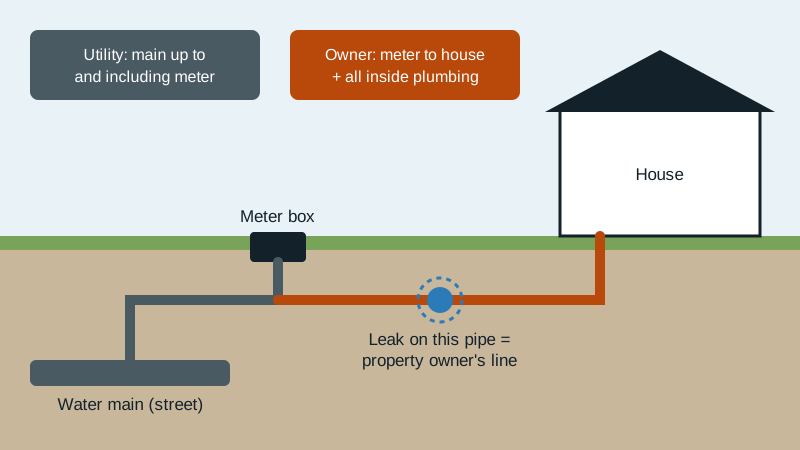
- Leak between the street and your water meter: call your water utility. In Lynnwood, the utility owns the pipe from the main up to and including the meter.
- Leak between the meter and your house: that buried service line belongs to the property owner. Call a leak detection company to pinpoint the spot, then a plumber to repair that section.
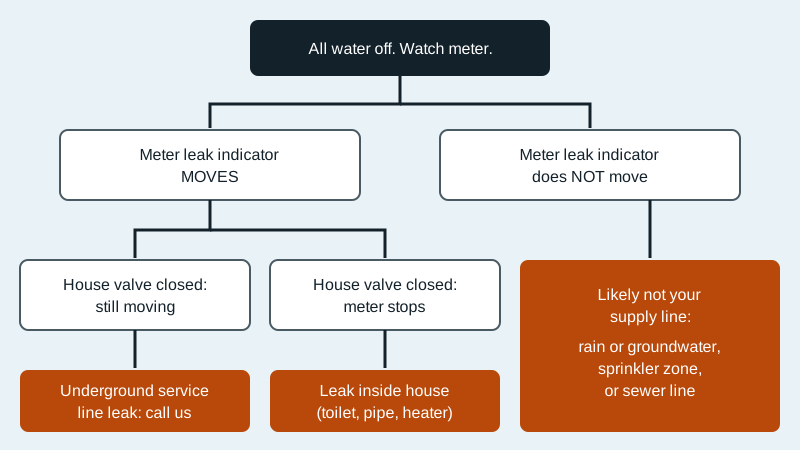
- Not sure where it is? Turn off every faucet and watch the meter. If it keeps moving with the house valve closed, you almost certainly have an underground water leak on your side of the meter.
An underground water leak is one of the hardest leaks to spot, because the pipe is buried and the water often soaks into the soil instead of showing up as a puddle. The first question most homeowners ask is simple: who do I call? The answer depends on which side of the water meter the leak is on, and a ten-minute meter test usually tells you.
Signs of an underground water leak
A main water line leak rarely announces itself all at once. Look for two or more of these together:
- A wet or spongy spot in the yard that stays soft after a few dry days, often along the path from the meter box to the house
- A patch of grass that is greener or grows faster than the rest of the lawn, especially in late summer
- Water in the meter box, or water bubbling up near the sidewalk, driveway or street
- A higher water bill with no change in how your household uses water
- Lower water pressure throughout the house, not just at one faucet
- The sound of running water near the meter or where the line enters the house when nothing is on
- Sinking soil, a small sinkhole or cracks in a walkway above the line
In Lynnwood, a soggy yard in November is not proof of a leak. Rain and high groundwater make many lawns wet for weeks. The difference is that rain-soaked ground dries out between storms and a broken supply line keeps feeding the same spot. That is why the meter test matters more than what the lawn looks like.
Do this first: the water meter leak test
Your water meter is the best tool you have. It measures every drop that passes into your property, including water that leaks underground. Our full guide on how to check your water meter for leaks has photos of the dial, but the short version is:
- Turn off all water. Faucets, toilets, washing machine, dishwasher, ice maker and the sprinkler system. Make sure nobody in the house uses water during the test.
- Find the meter. It is usually in a concrete or plastic box near the street or sidewalk. Lift the lid carefully and watch for spiders and standing water.
- Watch the leak indicator. Most meters have a small triangle or star-shaped dial that spins with even a tiny flow. If it moves, water is passing through the meter.
- Close your house shut-off valve. This is the valve where the line enters the home, usually in the crawl space, garage or near the water heater. If you are not sure where it is, see how to find your main water shut-off valve.
- Watch the meter again. If the indicator still moves with the house valve closed, the leak is on the buried service line between the meter and the house, or on a branch such as an irrigation line or outdoor faucet.
The City of Lynnwood asks customers not to turn the valve at the meter themselves. Use the valve on the house side. If you can't find one, the city's Public Works team can turn the meter valve for you.
Who to call for an underground water leak
Once you know roughly where the water is going, the right call is usually clear.
| What you found | Likely source | Who to call |
|---|---|---|
| Water leaking at or before the meter, or on the street side of the meter box | Utility's service connection or meter | Your water utility (City of Lynnwood or Alderwood Water & Wastewater District, depending on your address) |
| Meter keeps moving with the house valve closed, wet spot between meter and house | Underground water service line | A leak detection company to pinpoint it, then a plumber for the repair |
| Meter stops when the house valve is closed | Leak inside the home: toilet, pipe, water heater, slab | Check toilets first, then leak detection for hidden pipes |
| Wet spot only near sprinkler heads or valve boxes, or only when the system runs | Irrigation line or valve | Irrigation repair, or sprinkler leak detection if you can't find it |
| Meter doesn't move, wet spot smells bad or sits over the sewer path | Sewer line | A sewer or drain contractor |
| Meter doesn't move and the spot dries out between storms | Rain or groundwater | Usually no plumber needed; a drainage pro if it keeps happening |
The rule behind the first two rows comes from the Lynnwood Municipal Code. Under LMC 13.12.050, the water utility owns and maintains the connection from the main up to and including the meter, and the customer maintains the pipe from the meter to where the water is used. If your home is served by a different district, ask them where their responsibility ends. It is often the same idea, but check.
Why underground water line leak detection comes before digging
A service line can run a long way from the meter to the house, under lawn, garden beds, walkways and sometimes a driveway. Digging along the whole route to look for a leak costs time and money and tears up the yard. A wet spot on the surface can also be several feet from the actual break, because water follows the gravel bedding around the pipe and comes up wherever the soil gives way.
Professional water line leak detection narrows the search to a small area first. A typical visit includes:
- Confirming the leak with a meter test and a pressure check
- Tracing the route of the buried line so the search stays on the right path
- Acoustic listening at the surface to hear the hiss of escaping water through soil and concrete
- Checking branches like hose bibs and irrigation feeds, which can leak too
- Marking the leak spot on the ground, with notes and photos for your plumber and your records
Leak Detection Lynnwood finds leaks; we don't repair them. With the spot marked, the plumber of your choice can dig one small hole instead of a long trench, and you can compare repair quotes for the same job.
Is a main water line leak an emergency?
It depends on the flow. If water is gushing up through the lawn, flowing down the driveway or pressure has dropped sharply, treat it as an emergency leak: close the house shut-off valve to protect the inside plumbing, and call the utility if the water is coming from the meter area. Keep people and pets away from soft ground or a sinkhole.
A slow leak that only shows up on the meter is not dangerous today, but it is not something to leave for months. Water is billed whether you use it or not, soil can wash out around the pipe, and a weak spot in an older line tends to get worse. Book leak detection within a few days, and keep your bills and the repair receipt. If the leak raised your bill, our guide to the Lynnwood water leak adjustment explains how customers can apply for a credit once the repair is done.
Sprinkler leak or service line leak?
This is the most common mix-up in a Lynnwood yard. An irrigation system has its own pipes, valves and heads, and a cracked fitting can soak the lawn just like a broken service line. To separate them, close the irrigation system's own shut-off valve (often in a box near the backflow device) and repeat the meter test. If the meter stops, the sprinkler side is leaking and our irrigation leak detection page explains how those leaks are found. If the meter keeps moving, the main line is the more likely suspect.
FAQ
Who do I call for an underground water leak?
If the leak is on the street side of the water meter, call your water utility. If it is between the meter and your house, the line is yours: call a leak detection company to locate it, then a plumber to repair it. A meter test with the house valve closed tells you which side it's on.
Is the city responsible for a water leak in my yard?
In Lynnwood, the city's water utility is responsible for the pipe up to and including the meter. The buried line from the meter to the house is the property owner's responsibility, even though it runs underground.
How can I tell if my main water line is leaking?
Turn off all water, close the house shut-off valve and watch the meter's leak indicator. If it still moves, water is escaping between the meter and the house. A wet spot that stays soft in dry weather and a jump in your water bill are other signs.
Can a wet spot in the yard be from rain instead of a leak?
Yes, especially in the Lynnwood wet season. Rain-soaked ground usually dries between storms. If the meter doesn't move with all water off, the wet spot probably isn't coming from your supply line.
How is an underground water leak found without digging?
Technicians trace the route of the buried line, then listen at the surface with acoustic equipment for the sound of water escaping. The leak spot is marked so the repair needs only one small excavation.
Can I keep using water if I have an underground leak?
With a slow leak, usually yes, but every drop that leaks is billed and the leak can grow. If water is surfacing quickly or pressure drops, close the house shut-off valve and get the leak located right away.
Next step
Do the meter test today. It takes about ten minutes and tells you whether to call the utility, check your sprinklers or have the buried line checked. If the meter keeps moving with everything off, call Leak Detection Lynnwood at (425) 276-0836 and ask about same-day availability. You can also read more about our leak detection in Lynnwood.
Think you have a hidden leak?
Call and describe the symptoms. You will get straight answers about what testing involves and what it may cost before anyone visits.