High Water Bill but No Visible Leak? A Lynnwood Checklist
The bill doubled, nothing is dripping, and the floors are dry. Before you assume the meter is wrong, spend twenty minutes with this checklist. It tells you whether water is really escaping, and roughly where.
- A high water bill but no visible leak usually means one of three things: water use really went up, a quiet leak is running somewhere you can't see, or the meter was misread. A leak is the most common answer.
- Run a water meter leak test: turn off every fixture and watch the meter's leak indicator. If it moves, water is flowing right now. Then close the house shut-off valve to tell an inside leak from a leak in the buried line.
- Check the toilets first. A running toilet is silent more often than people think and is the usual cause of an unexplained high water bill.
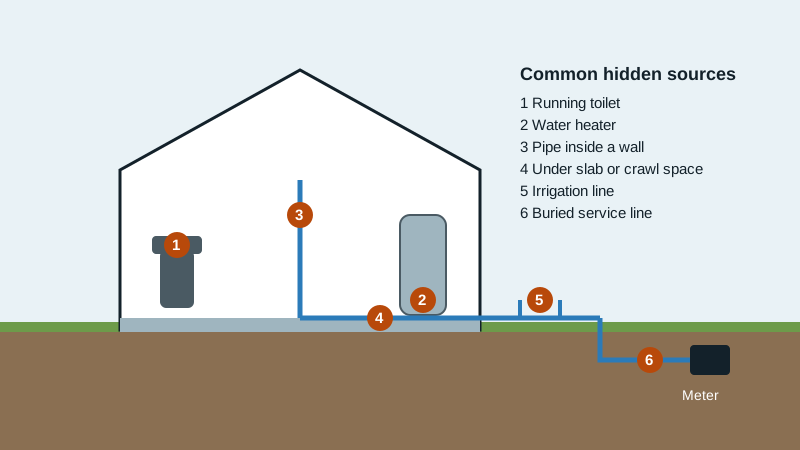
Why is my water bill so high with no leak in sight?
A leak doesn't have to make a puddle. Water can run straight down a toilet drain, soak into the soil under a lawn, or drip into a crawl space nobody visits until spring. That is why so many Lynnwood homeowners see a jump on the bill long before they see any water. The U.S. EPA estimates that the average household's leaks can waste more than 9,300 gallons a year, and much of that comes from fixtures people walk past every day.
So the useful question is not "where is the puddle?" It is "is water passing through the meter when nobody is using it?" The steps below answer that in order, starting with the free checks.
Step 1: Compare the bill with the same period last year
Pull up the same billing period from last year, not just the last bill. Summer bills in Snohomish County often run higher because of lawn watering, so comparing a fall bill with a summer one can fool you. Then ask what changed:
- A new person in the house, a guest staying for weeks, or kids home from school
- A new lawn, garden beds or a sprinkler system that wasn't shut down for fall
- Filling a hot tub or pool, pressure washing, or a long project with the hose
- A rate or utility tax change on the bill itself, which raises the dollar amount without raising the gallons
Look at the usage number (gallons or cubic feet), not only the dollar total. If the gallons are up sharply and nothing changed in the household, keep going. The EPA's rule of thumb is that a family of four using more than 12,000 gallons a month in winter probably has a serious leak.
Step 2: Do a water meter leak test
This is the single best test for an unexplained high water bill, and it takes about ten minutes. Our full guide on how to check your water meter for a leak has photos of the dial, but here is the short version:
- Turn off every faucet, shower, dishwasher, washing machine, ice maker and sprinkler. Make sure no toilet is refilling.
- Find your meter. It is usually in a covered box near the street, sidewalk or property line. Lift the lid carefully; spiders and standing water are common.
- Watch the leak indicator, the small triangle or star on the meter face. If it turns, water is flowing somewhere on your property.
- For a very slow leak, write down the full reading, use no water for two hours, and read it again. Any change points to a leak.
If the leak indicator is spinning with everything off, you have confirmed a leak even though you can't see it. That is useful information for the plumber, the leak detection technician and the utility.
Step 3: Inside or outside? Close the house valve
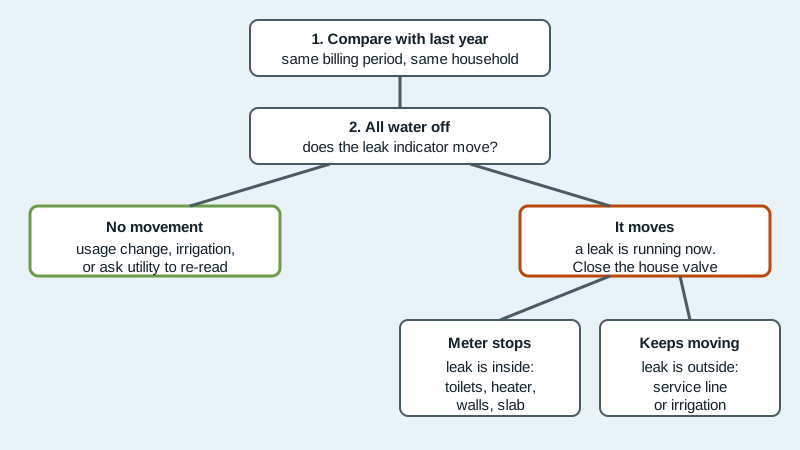
Next, close your main shut-off valve where the line enters the house. In many Lynnwood homes it is in the crawl space, garage or near the water heater; our guide to finding the main water shut-off valve shows the usual spots. Then go back to the meter:
- The indicator stops: the leak is inside the house. Toilets, the water heater, a pipe in a wall, or a line under the slab are the likely sources.
- The indicator keeps moving: water is escaping between the meter and the house, or through an irrigation line that branches off before the valve. That points to an underground water line leak.
Step 4: Check the toilets (the usual suspect)
Can a running toilet cause a high water bill? Yes, and it is the cause plumbers find most often. A worn flapper lets water slip into the bowl, the fill valve tops the tank back up, and the cycle repeats all day. A toilet that runs constantly can waste 200 gallons a day or more, which is enough to change a bill on its own.
Do the dye test on every toilet: put a few drops of food coloring in the tank, wait about ten minutes without flushing, and look in the bowl. Any color in the bowl means the tank is leaking. Flush afterward so the dye doesn't stain. Our guide to a toilet running constantly covers the three tank parts that usually cause it and how much water a toilet can leak in a day.
Step 5: Other quiet leaks to check
| Where to look | What gives it away |
|---|---|
| Water heater | Damp floor or pan, a dripping relief valve pipe, or a heater that cycles when no one uses hot water |
| Faucets and showerheads | A slow drip at night, or a tub spout that runs a little while the shower is on |
| Washer, dishwasher, fridge line | Water stains on the floor behind the appliance, a swollen cabinet base |
| Outdoor hose bibs | A drip outside, or a wet wall inside behind a frost-free bib |
| Irrigation system | A soggy patch, a head that weeps after the zone shuts off, a bill spike in summer |
| Crawl space or slab | Musty smell, damp insulation, a warm spot on the floor, sound of running water |
| Buried service line | Meter moves with the house valve closed, a green or soft strip in the yard |
If your system has sprinklers, run each zone and walk it. A cracked lateral line can leak for weeks without a visible puddle, especially in sandy or well-drained soil. Our irrigation leak detection service tests zones one at a time.
Step 6: If no leak shows up, check the meter and the bill
If the leak indicator never moves and household use hasn't changed, the problem may be the reading, not the plumbing. Write down your current meter reading and compare it with the reading printed on the bill. If the meter shows less than the bill says you used, call your utility and ask for a re-read or a meter check. Inside city limits that is usually City of Lynnwood Utility Billing at 425-670-5170; in surrounding areas it may be the Alderwood Water & Wastewater District at (425) 787-0220. The name on the bill tells you which one.
When the leak is real but hidden
Sometimes the meter clearly shows a leak, the toilets pass the dye test, and there is still no water anywhere. That is the point where guessing gets expensive. Opening walls or digging up the yard to look around can cost more than the leak itself.
Professional hidden water leak detection uses tools such as acoustic listening equipment, thermal imaging, moisture meters and line pressure tests to pinpoint where the water is escaping, usually without tearing anything open first. A typical visit starts with the same meter test you did, then isolates sections of plumbing until the leak is narrowed down to one area and marked for the plumber. If the meter keeps running with the house valve closed, the visit focuses on the buried line between the meter and the house, a common source of hidden water leaks that never reach the surface.
Leak Detection Lynnwood finds leaks; we don't repair them. Once the source is confirmed and marked, the plumber of your choice handles the fix, and you have a clear location and photos for the repair invoice.
Can I get money back on the bill?
Possibly. Both the City of Lynnwood and the Alderwood Water & Wastewater District offer leak adjustments for leaks on the customer's side of the meter, generally once every 24 months, after the leak is found and repaired. Keep your meter readings, photos and repair invoice. Our guide to Lynnwood water leak adjustments explains what each utility asks for. Always confirm the current rules with your utility before you apply.
FAQ
Why is my water bill so high when I don't have a leak?
Check usage first: seasonal watering, house guests, a filled hot tub or a rate change. If none of those fit, run a water meter leak test. Many homeowners who are sure they have no leak find a toilet or buried line quietly running.
Can a running toilet cause a high water bill?
Yes. A toilet that runs or refills on its own can waste hundreds of gallons a day, often without a sound you'd notice. The food coloring dye test tells you in about ten minutes.
How do I do a water leak test at home?
Turn off all water, then watch the leak indicator on your meter. For slow leaks, write down the reading, use no water for two hours and read it again. Any movement means water is flowing somewhere.
How do I know if the leak is underground?
Close the main shut-off valve at the house. If the meter's leak indicator keeps moving, the leak is between the meter and the house, or in an irrigation line, rather than inside.
Should I call the water company or a leak detection company?
Call the utility if the meter doesn't move and you think the reading is wrong, or if water is leaking at the meter or on the street side. If the meter shows a leak on your side and you can't find it, a leak detection company can pinpoint it before any repair work starts.
Next step
Do the meter test today and write down what the leak indicator does with the house valve open and closed. If it shows a leak you can't find, call Leak Detection Lynnwood at (425) 276-0836 and ask about same-day availability, or see our full range of leak detection services in Lynnwood. For more water-saving tips, the EPA's WaterSense Fix a Leak Week guide is a good reference.
Think you have a hidden leak?
Call and describe the symptoms. You will get straight answers about what testing involves and what it may cost before anyone visits.