What to Expect at a Leak Detection Appointment
You think there is a hidden leak, and you're ready to have it found. Here is what actually happens during a leak detection appointment, how long it usually takes, how to get your home ready, and what you should have in hand when the technician leaves.
- A leak detection appointment starts with your symptoms and a water meter leak test, then uses valves and pressure tests to find which line is losing water, and finally narrows it down with listening, thermal and moisture tools.
- A simple case can take an hour or two. A slab leak, a long buried water line or several leaks can take longer. Ask for an estimate when you call.
- To prepare: know where your water meter and main shut-off valve are, clear access to wet areas, turn off sprinklers, and don't use water during the test.
- Detection and repair are two separate jobs. The goal of the visit is a marked leak location and a clear explanation, so the plumber only opens up the right spot.
If you have booked, or are about to book, a leak detection appointment, it helps to know what the visit looks like. Most Lynnwood homeowners call because of a high water bill, a water meter that keeps moving, the sound of running water when nothing is on, a warm spot on the floor or a stain that won't dry. Professional leak detection is the step between noticing that something is wrong and paying for a repair. Done well, it saves you from cutting holes in walls, ceilings or the driveway just to look.
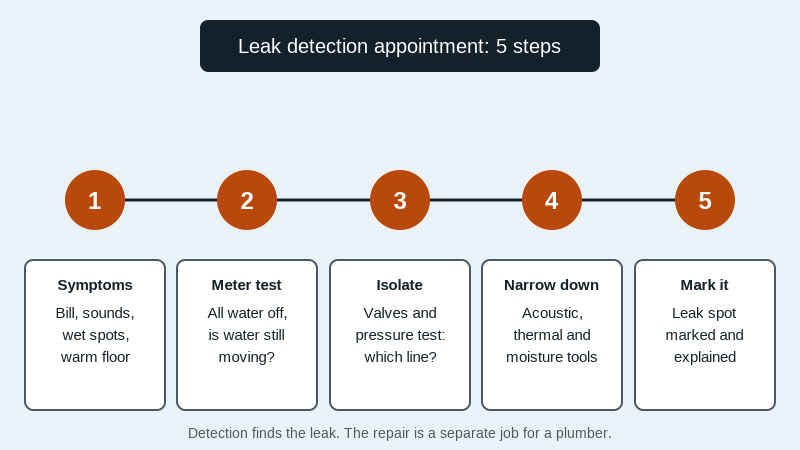
What happens during a leak detection appointment
Every home is different, but a professional leak detection visit usually follows the same logic: confirm that water is really escaping, work out which part of the plumbing is losing it, then pinpoint the spot.
1. Talking through the symptoms
The technician starts by asking what you have noticed and when. Useful details include how much your water bill went up, which rooms have wet spots or odors, whether a floor feels warm, if the water heater seems to run more than usual, and whether anything changed recently, such as a new fixture, a cold snap or work on the house. These clues decide where testing starts.
2. The water meter leak test
Next comes a water leak test at the meter. With every faucet, toilet and appliance off, the technician watches the meter's leak indicator. If it keeps turning, water is leaving the system somewhere. This is the same check you can do yourself, and our guide on how to check your water meter for leaks explains it step by step. If the meter doesn't move at all, the problem may be a drain, a roof or groundwater rather than a pressurized supply line, and the visit shifts direction.
3. Isolating the system
Then the technician splits the plumbing into sections. Closing the main shut-off at the house tells them whether the leak is inside the home or on the buried line between the meter and the house. Closing the water heater's cold supply separates the hot side from the cold side. A pressure test on a section shows whether it holds pressure or slowly loses it. This step often answers the biggest question quickly: is it a toilet or fixture, a pipe inside the house, a line under the slab, or the underground water line in the yard?
4. Narrowing it down with leak detection tools
Once the leaking section is known, the technician uses non-invasive leak detection tools to find the exact spot. Which tools are used depends on the pipe and where it runs:
- Acoustic leak detection. Water escaping from a pressurized pipe makes a sound. Ground microphones and listening devices pick up that sound through floors, walls, concrete and soil, and it gets louder closer to the leak.
- Thermal imaging leak detection. An infrared camera shows temperature differences. Hot water leaks show up as warm patches, and cold water often shows up as a cooler area on a wall or floor.
- Moisture meters. These confirm whether drywall, flooring or wood framing is actually wet, and help map how far the water has spread.
- Pressure and isolation tests on single lines, so a leak in one branch can be separated from the rest.
- Line tracing to follow where a buried or hidden pipe really runs, which matters when nobody knows the route.
The U.S. Department of Energy's overview of leak detection technologies describes the same core tools, such as listening devices and handheld thermal imaging, for service lines that supply a single building.
5. Marking the leak and explaining the findings
When the source is found, the spot is marked on the floor, wall or ground. You should get a plain explanation of what was found, how confident the result is, and what kind of repair it points to, such as a fixture part, a pipe section in a wall, a slab leak or a yard line. Ask for photos or notes you can share with your plumber and keep for your records.
How long does leak detection take?
There is no single answer, because the time depends on what is leaking and where. As a rough guide:
| Type of leak | What makes it quicker or slower |
|---|---|
| Fixture, toilet or visible area | Usually the quickest, once the meter test points there |
| Pipe inside a wall or ceiling | Depends on access and how far water has traveled |
| Slab leak under a concrete floor | Takes longer: hot and cold lines are tested, then traced under the floor |
| Underground water line in the yard | Depends on the pipe material, its depth and how long the run is |
| More than one leak | Each one has to be isolated and confirmed separately |
A simple leak may be found in an hour or two. Slab leaks, long service lines and homes with several problems can take longer. When you call, describe your symptoms and ask how much time to set aside, so you're not stuck waiting at home without a plan.
How to prepare for leak detection
A little preparation makes the appointment faster and the result more reliable.
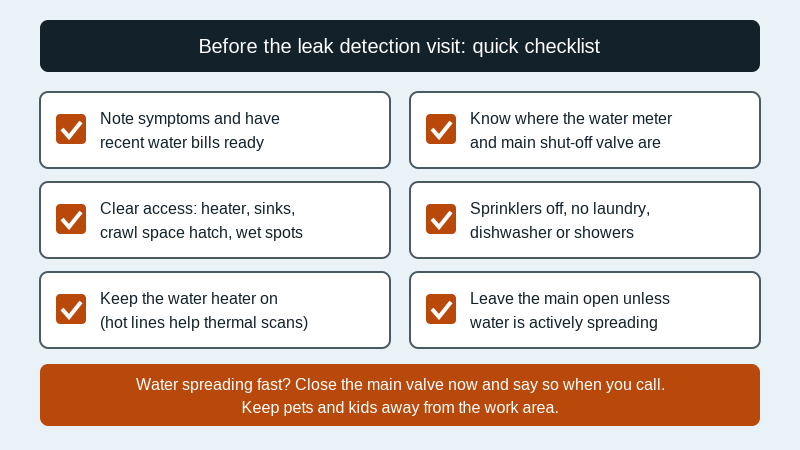
- Write down the symptoms. When the bill went up, where you see moisture, what you hear and when. Have the last few water bills handy.
- Find the water meter and main shut-off valve. Lynnwood meters are usually in a box near the street or sidewalk. If you don't know where the house valve is, our guide on how to find your main water shut-off valve helps.
- Clear access. Move items away from the water heater, under sinks, the crawl space hatch, the garage wall and any wet spots.
- Stop water use during the test. Turn off the irrigation controller, and don't run laundry, the dishwasher or showers while the technician is testing. Running water hides the leak.
- Keep the water heater on unless it is the thing leaking. Hot water lines show up much better on a thermal scan when they are hot.
- Leave the main valve open unless water is actively spreading. Acoustic tests need the pipes under pressure. If you had to shut the water off, say so when you call.
- Keep pets and kids away from the work area, and mention any areas that are hard to reach.
Leak detection vs. leak repair
It is worth knowing what you are booking. Leak detection is about finding the leak: confirming it, locating it and explaining it. Repair is the next job, usually done by a plumber, and it may involve opening the wall or floor at the marked spot, rerouting a line or replacing a section of pipe. Leak Detection Lynnwood focuses on detection and does not do leak repairs. The benefit of separating the two is that the repair starts in the right place, with a much smaller opening than a search by guesswork.
Signs it is time to book a leak detection appointment
- The water meter leak indicator moves with everything turned off
- Your water bill jumped and you can't find a visible leak (see our high water bill checklist)
- You hear water running inside a wall or under the floor
- A warm spot on a slab floor, or the water heater runs more than it should
- Stains, peeling paint, musty smells or damp flooring that keep coming back
- A soggy patch in the yard that stays wet in dry weather
If one of these sounds familiar, our hidden water leak detection service is the right place to start.
FAQ
How long does a leak detection test take?
A simple leak can often be found in an hour or two. Slab leaks, long underground water lines and homes with more than one leak take longer. Describe your symptoms when you call and ask how much time to plan for.
Does leak detection damage walls or floors?
Professional leak detection is designed to be non-invasive. Acoustic tools, thermal imaging and moisture meters work from the surface. The goal is to mark one spot, so any opening needed for the repair is as small as possible.
Do I need to be home for a leak detection appointment?
Yes, it is best if you or another adult is there. The technician needs access to the meter, the shut-off valves, the water heater and the rooms involved, and can explain the results to you at the end.
Should I turn off the water before the leak detection visit?
Leave the main valve open unless water is actively spreading, because many tests need the pipes under pressure. Do stop using water during the test and turn off sprinklers. If you had to shut the water off, mention it when you call.
Will the leak detection company fix the leak?
Not always. Some companies only locate leaks, and some also repair them. Leak Detection Lynnwood focuses on finding the leak and explaining the results, so you know exactly what kind of repair to arrange.
How do I find a leak detection company near me?
Look for a local company that explains its process, tells you which tools it uses, and is clear about whether it repairs leaks or only finds them. Ask what you will receive at the end of the visit, such as a marked location and notes.
Next step
Do a quick meter check, jot down your symptoms and clear access to the wet areas. Then call Leak Detection Lynnwood at (425) 276-0836 to book a leak detection appointment and ask about same-day availability. You can also read more about our leak detection in Lynnwood and the Snohomish County communities nearby.
Think you have a hidden leak?
Call and describe the symptoms. You will get straight answers about what testing involves and what it may cost before anyone visits.