Gas Water Heater Leaking From the Bottom: Condensation or a Real Leak?
Water around the base of a gas water heater, or a sizzling sound from the burner, is one of the most common worries in Lynnwood homes when winter water turns cold. Sometimes it is harmless condensation. Sometimes it is the tank. Here is how to tell the difference safely.
- A gas water heater leaking from the bottom is often condensation, not a failed tank. Burning gas makes water vapor, and when the tank is full of cold water that vapor turns back into water on the cold metal and drips onto the burner.
- Condensation usually shows up when the burner is running, after heavy hot water use, on a brand new heater, or in cold weather. It should stop once the whole tank is hot.
- If water keeps coming back after the tank has been sitting on pilot for several hours, look at the drain valve, the relief valve drip tube and the connections. If they are dry, the tank is probably leaking.
- If you smell gas, do not touch the controls. Leave the house and call 911 or your gas utility from outside.
If your gas water heater is leaking from the bottom, the first thing to know is that water at the base does not always mean the tank has rusted through. Gas tank heaters have a burner and a flue right in the middle of the tank, and that design creates a kind of "leak" electric heaters don't have: condensation. The checks below take a few minutes plus one overnight test, and they tell you whether you are looking at a normal drip, a valve, or a tank that needs replacing.
First, make it safe
A few drops can wait while you look. A steady flow can't. If water is spreading across the floor:
- Turn the gas control to OFF or PILOT. The gas control valve is the box on the front of the heater near the bottom, with a temperature dial and a knob on top.
- Close the cold water valve. It is on the cold pipe going into the top of the heater. If you can't find one, use the main water shut-off valve for the house.
- Keep away from hot water. Water coming from the tank or the relief valve can be hot enough to scald.
- Move stored items. In many Lynnwood homes the water heater sits in a garage, utility closet or crawl space, where boxes and flooring soak up water fast.
Never cover or block the burner access opening or the vent to stop a drip. A gas water heater needs combustion air and a working vent. If you smell gas, see soot around the burner door, or the flame looks lazy and yellow instead of mostly blue, stop and have a qualified gas technician look at it.
What to check first
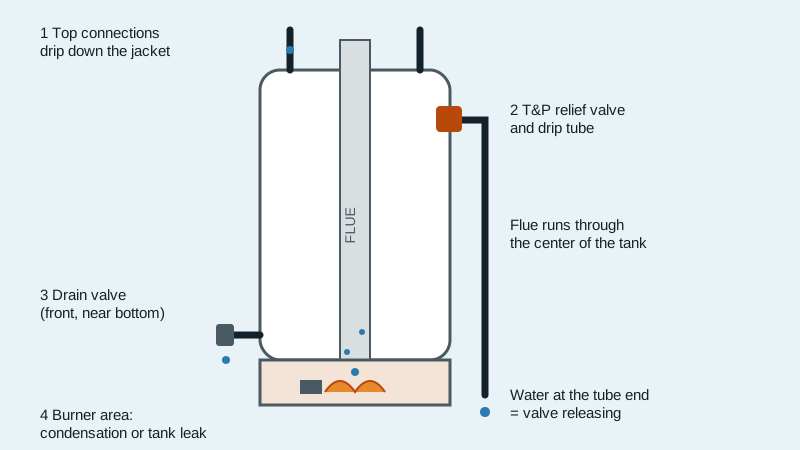
Before running the overnight pilot test, a five-minute check rules out the easy sources. Dry the heater and the floor first, then check from the top down:
- Top connections. Dry the cold inlet, hot outlet and any flexible supply lines on top of the tank, then check them again in ten minutes. A wet trail down the outside of the jacket points back to a fitting up here.
- Relief valve drip tube. Look at the end of the pipe running down the side of the tank. Water there means the temperature and pressure relief valve is releasing. Never cap or plug this pipe.
- Drain valve. Check the faucet-style valve near the bottom front. Make sure the handle is fully closed and look for seepage around the stem.
- Burner chamber. Look through the burner access opening for water, rust flakes or white crust on the burner itself. Water in the chamber when the tank is already hot, or rust flakes on the burner, points to a tank leaking inside the combustion chamber rather than condensation.
- When the water appears. Note whether the dripping happens only while the burner is firing, or also after the burner has been off for hours. Condensation only forms while the burner fires against cold water; a tank leak does not stop.
If the valves and connections are dry and water still shows up, run the overnight pilot test below. If the source is still unclear after that, a water heater leak detection visit can confirm whether the water comes from the heater or from a hidden pipe nearby. Our main guide on a water heater leaking from the bottom covers the same checks for gas and electric heaters together.
Why a gas water heater "sweats": condensation explained
Natural gas produces water vapor when it burns. The hot exhaust rises through the flue tube in the center of the tank. When the water in the tank is cold, the flue walls and the tank bottom are cold too, so some of that vapor condenses into droplets. They run down the flue and land on the burner, which is why people hear a sizzling or frying sound and see water dripping on the burner while the heater is firing.
According to the manufacturer A.O. Smith's technical bulletin on water heater condensation, a typical home water heater can produce around half a gallon of water vapor for every hour the burner runs, and condensation should stop once the whole tank is heated to roughly 115°F. Newer, more efficient heaters pull more heat out of the exhaust, so they can condense more than older ones.
Condensation is most likely when:
- The water heater is new and was just filled with cold water. A brand new water heater leaking from the bottom on its first day is very often condensation.
- Incoming water is cold. Water from the street is colder in a Snohomish County winter and early spring, so the tank takes longer to warm up.
- You've used a lot of hot water, such as several showers in a row or a load of laundry, and the tank refills with cold water.
- The thermostat is set low, so parts of the tank stay cool for longer.
Heavy condensation can drip on the pilot and put it out, so a pilot light that keeps going out on cold mornings can have the same cause. If that happens often, have a gas appliance technician check it, because a pilot outage can also come from a bad thermocouple or a venting problem.
The other causes of water at the bottom
Condensation is common, but it isn't the only source. Our main guide on a water heater leaking from the bottom covers every cause for gas and electric heaters. On a gas unit, check these:
| Where you see water | Likely cause | Usually repairable? |
|---|---|---|
| Drips on the burner only while it's firing, floor dries later | Condensation | Normal; no repair needed |
| Wet at the end of the pipe running down the side | T&P relief valve releasing water (drip tube) | Often; find the cause first |
| Drips from the faucet-style valve near the bottom front | Drain valve not fully closed or worn | Usually |
| Water trails down the outside jacket from the top | Loose fitting or connector on the inlet, outlet or anode | Usually |
| Water in the burner chamber even when the tank is hot, rust flakes on the burner | Tank leaking inside the combustion chamber | No; the heater needs replacing |
| Puddle near the heater but the heater is dry | A nearby pipe, washer, furnace condensate line or hidden leak | Depends on the source |
If the pipe running down the side is the wet spot, the relief valve is doing its job of releasing pressure or heat. Our guide to a water heater relief valve leaking explains why that happens and what never to do with that valve.
The overnight pilot test: condensation or a real leak?
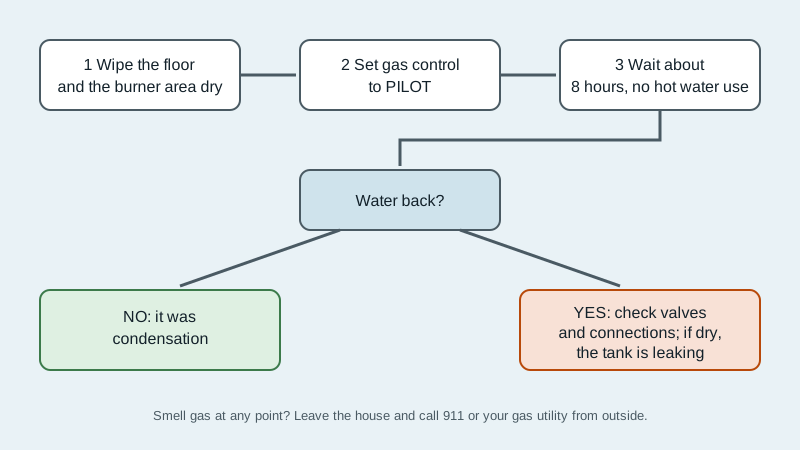
This simple test is the clearest way to tell condensation from a leaking tank. It works because a tank leaks whether the burner runs or not, but condensation only forms when the burner fires against cold water.
- Dry everything. Wipe the floor and any water you can safely reach around the base. Put a dry paper towel at the edge of the heater so new water is easy to see.
- Set the gas control to PILOT. The pilot stays lit but the main burner won't fire.
- Wait about eight hours without using hot water. Overnight is easiest.
- Check again. If the floor and towel are dry, the water was condensation. Turn the control back to your normal setting.
- If water is back, check the drain valve, the drip tube and the top connections. If those are dry and water is still showing up under the heater, the tank itself is probably leaking.
How urgent is it?
Not urgent: light dripping on the burner during heating that stops once the tank is hot, with no water left on the floor later. That is normal condensation.
Soon: a drain valve or connection drip, or a relief valve that releases water now and then. These waste water and can damage flooring, subfloor and the framing around a garage or closet heater.
Today: water that keeps returning after the pilot test, rust-colored water at the base, a puddle that grows, or a heater more than ten years old that has started to leak. A tank that has started leaking can fail suddenly. Turn the gas to OFF, close the cold water valve and arrange a replacement.
When the water heater isn't the source
Sometimes the puddle near the water heater is only near it. Water on the floor near the water heater can come from a supply pipe in the wall behind it, a washing machine hose, a furnace or AC condensate line, or a hidden pipe under the slab. A gas water heater also adds heat to that corner, so a slow leak nearby can look like it is coming from the tank.
A quick water meter check helps. Turn off all water in the house and watch the meter's leak indicator. If it keeps moving, water is escaping somewhere. Our guide on how to check your water meter for leaks walks through it. If the heater passes the pilot test but the meter still moves, or the floor stays wet with no clear source, that is when professional hidden water leak detection makes sense.
What a leak detection visit involves
A leak detection technician doesn't replace water heaters. The job is to find out exactly where the water is coming from, so you don't pay to replace a heater that wasn't leaking, or replace one and still have a wet floor. A typical water heater leak detection visit includes:
- Checking the drain valve, relief valve, drip tube and supply connections for active leaks
- Telling condensation from a tank leak by watching how the heater behaves while it fires
- Using moisture meters and thermal imaging to trace water that travels along the floor or wall
- Testing the supply pipes and running a meter test to rule out a hidden leak nearby
You get a clear answer, such as "condensation, no repair needed," "drain valve," "tank failure" or "supply pipe in the wall," so you know whether to call a plumber, a water heater installer or nobody at all.
FAQ
Why is my gas water heater leaking from the bottom?
The most common reasons are condensation dripping onto the burner, a drain valve that is loose or worn, the relief valve releasing water through its drip tube, a loose connection on top, or a tank that has corroded through. The overnight pilot test tells you whether it is condensation.
Is water dripping on the burner of a gas water heater normal?
A little is normal when the tank is full of cold water, such as after heavy hot water use, on a new heater or in cold weather. It should stop once the tank is fully hot. If it continues with a hot tank or water collects on the floor, look for a leak.
Why does my gas hot water heater make a sizzling sound?
Sizzling usually means water droplets are landing on the hot burner. That is often condensation. If you also find water on the floor after the burner has been off for hours, or rust flakes on the burner, the tank may be leaking.
What should I do if my gas water heater is leaking from the bottom?
Turn the gas control to OFF or PILOT, close the cold water valve if water is spreading, and keep away from hot water. Then do the pilot test to see whether it is condensation. If you smell gas, leave the house and call 911 or your gas utility from outside.
Can a brand new water heater leak from the bottom?
A brand new gas heater often looks like it is leaking because it condenses heavily while the first tank of cold water heats up. If water keeps appearing after the tank is hot, check the new connections and the drain valve, and contact the installer.
Can I keep using a gas water heater that is leaking?
If it is only condensation, yes. If the tank itself is leaking, it is safest to turn the gas off and plan a replacement, because a leaking tank can fail with little warning.
Is a gas water heater leaking from the bottom an emergency?
Condensation dripping on the burner is not an emergency. It becomes urgent if water keeps returning after the overnight pilot test, the puddle is growing, the water is rust-colored, or the tank itself is leaking. A gas smell is always an emergency: leave the house and call 911 or your gas utility from outside.
How do I know if my gas water heater tank is leaking or if it is just condensation?
Run the overnight pilot test: dry everything, set the gas control to PILOT, and wait about eight hours without using hot water. If the floor stays dry, the water was condensation. If water is back and the drain valve, drip tube and top connections are dry, the tank itself is probably leaking.
Next step
Run the overnight pilot test tonight. If the floor stays dry, it was condensation. If water keeps coming back, the source isn't clear, or the floor stays wet even when the heater is dry, call Leak Detection Lynnwood at (425) 276-0836 and ask about same-day availability. You can also see more about our leak detection in Lynnwood and nearby Snohomish County communities.
Think you have a hidden leak?
Call and describe the symptoms. You will get straight answers about what testing involves and what it may cost before anyone visits.