Signs of a Slab Leak: How to Tell and What to Do
A pipe leaking under a concrete floor never makes a puddle you can point to. It shows up as small, odd clues: a warm patch of tile, a water heater that never rests, a meter that keeps turning. Here is how to read those clues and test them yourself.
- The most common signs of a slab leak are a warm spot on the floor, a water heater that runs far more than usual, the sound of running water with every tap off, damp carpet or warped flooring, and a water meter that keeps moving when nobody is using water.
- One sign alone proves little. Two or more together, plus a meter that moves with everything off, is a strong reason to suspect a leak under the slab.
- You can narrow it down at home in about 20 minutes with the meter, the main shut-off valve and the cold valve on the water heater. Pinpointing the exact spot under the concrete takes professional slab leak detection.
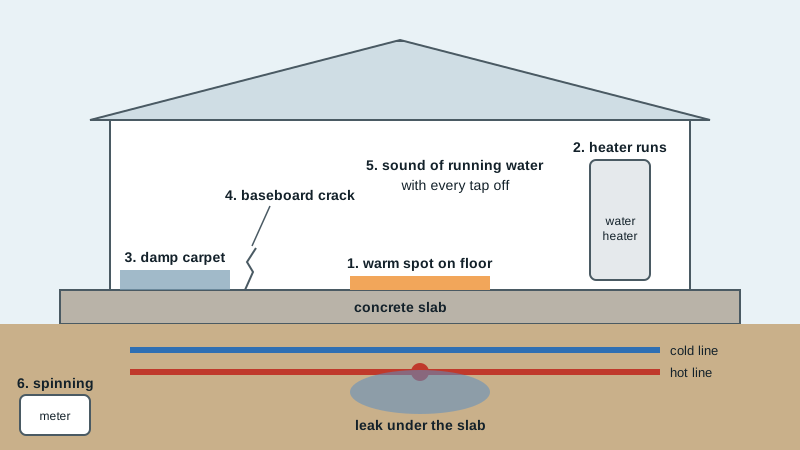
What counts as a slab leak?
A slab leak is a leak in a water supply line that runs inside or under a concrete floor. Water escapes into the gravel and soil below the slab instead of onto a floor you can see, so it can run for weeks before anyone notices. Plenty of older Lynnwood houses sit over crawl spaces, where a leak is easier to spot with a flashlight. Slab floors are more common in some newer homes, townhomes, additions, and garages that were converted into living space. If any part of your home has water lines under concrete, the signs below apply to you.
A slab leak is not the same thing as a sewer or drain leak under the slab. Drain leaks usually show up as slow drains, backups or a sewer smell. This guide is about pressurized supply lines, the ones that leak around the clock, whether or not you are using water.
The 7 most common signs of a slab leak
Here are the slab leak symptoms in roughly the order people tend to notice them. Each one can have other causes, so note which ones you see and then run the test in the next section.
- A warm or hot spot on the floor. A leaking hot water line heats the concrete above it. Bare feet, pets lying in the same spot, or tile that feels warm in one area are classic clues. This is one of the most specific signs, because few other problems warm a floor in one place.
- The water heater runs constantly. If hot water is escaping under the slab, the heater keeps refilling and reheating. You may hear the burner or elements come on when nobody has used hot water, or notice that hot water runs out sooner than it used to.
- The sound of running water. A hiss or trickle you can hear with every faucet, toilet and appliance off, often loudest late at night when the house is quiet.
- A high water bill with no visible leak. Usage climbs while your habits stay the same. Our high water bill checklist walks through ruling out the everyday causes first.
- Damp carpet, warped laminate or loose tile. Moisture wicking up through the slab can leave carpet pads damp, make wood or laminate cup, or loosen tiles, often near a wall where the pipe runs.
- Lower water pressure. A large under-slab leak can take enough flow that showers and faucets feel weaker across the house. A small leak usually won't change pressure, so don't rule out a slab leak just because pressure seems fine.
- Musty smell, mildew or new cracks. A lasting damp smell, mildew along baseboards, or cracks in flooring or the lower part of walls can follow a leak that has been running for a while.
Is it a slab leak or something else?
In the Pacific Northwest, wet winters can fool you. Rain and high groundwater can dampen a slab floor or a garage, and condensation can make cold concrete look wet. This quick table helps sort it out.
| What you notice | Points to a slab leak | Points to something else |
|---|---|---|
| Damp floor | Damp in dry weather, stays damp, meter moves | Only after heavy rain, near an exterior wall or downspout |
| Warm spot | One warm patch, heater runs a lot | Radiant floor heat, a duct or a sunny window |
| High bill | Meter moves with all water off | Meter still with all water off: usage or billing |
| Running water sound | Heard with every fixture off | A toilet refilling or an ice maker |
| Low pressure | Whole house, plus other signs | One faucet only: aerator or valve |
If the clues point to groundwater rather than plumbing, our guide on why a basement or crawl space is leaking water covers drainage and seepage.
How to tell if you have a slab leak: a 20-minute home test
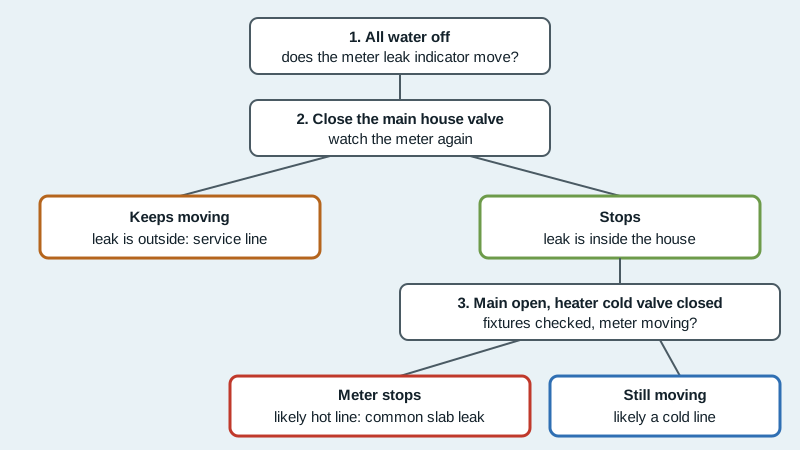
You don't need tools beyond a flashlight. The goal is to answer two questions: is water leaking right now, and if so, where in the system?
- Turn everything off and watch the meter. Shut off every faucet, shower, toilet, washer, dishwasher, ice maker and sprinkler. Find the water meter, usually in a box near the street or sidewalk, and watch the small leak indicator on the dial. If it turns, water is flowing somewhere. For a very slow leak, the EPA suggests reading the meter, using no water for two hours, and reading it again. Our guide to checking your water meter for a leak shows what the dial looks like.
- Close the main house valve. With the water still off inside, close your main shut-off. If the leak indicator keeps moving, the leak is between the meter and the house, which is an underground water line leak, not a slab leak. If it stops, the leak is inside the home's plumbing. Not sure where the valve is? See how to find your main water shut-off valve.
- Isolate the hot side. Reopen the main valve, keep every fixture off, and close only the cold supply valve on top of the water heater. If the meter now stops, the leak is very likely on a hot water line, which is a common slab leak pattern and fits a warm spot on the floor. If the meter keeps moving, the leak is likely on a cold line, a toilet or another fixture.
- Rule out the toilets. Before blaming the slab, put a few drops of food coloring in each toilet tank and wait about ten minutes without flushing. Color in the bowl means a tank leak, which is far cheaper to fix. Our running toilet guide has the details.
Go gently with old valves. If a valve is stiff or starts to drip at the handle, stop and leave it. Reopen the water heater valve when you are done, so the tank refills normally.
How urgent is a slab leak?
A slab leak is rarely a "call 911" emergency, but it is not something to leave until spring. The water keeps running every hour of the day, and a hot line also wastes the energy used to heat it. Over time, moisture under the floor can ruin flooring, feed mold, and wash out the soil that supports the slab.
Treat it as urgent if:
- Water is coming up through the floor or seams in the tile
- A floor spot feels hot, not just warm
- The meter's dial is turning fast with everything off
- You smell mildew in carpet or along walls
In those cases, close the main valve when you aren't using water, and turn the water heater to its vacation or pilot setting if the hot side is leaking, following the maker's instructions. If you ever smell gas near a gas water heater, leave the house and call 911 or your gas utility from outside.
What professional slab leak detection involves
Your home test can tell you a leak exists and roughly which side of the system it's on. It can't tell you where under the concrete to open the floor. That is what slab leak detection is for. A typical visit includes:
- Pressure testing the hot and cold lines separately to confirm which line is losing water
- Line tracing to map the route the pipe takes under the slab
- Acoustic listening to hear the leak through the concrete
- Thermal imaging to see warm water spreading under the floor on hot lines
- Marking the spot on the floor, with notes and photos for the repair and any insurance claim
Leak Detection Lynnwood finds leaks; we don't repair them. Once the spot is marked, the plumber of your choice can decide on a spot repair through the slab, a re-route of the line through walls or the ceiling, or a re-pipe. An accurate location keeps that work smaller.
FAQ
What are the first signs of a slab leak?
Usually a higher water bill, a water heater that seems to run more, or a warm spot on the floor. Damp carpet and cracks tend to come later, after the leak has been running for a while.
Can you hear a slab leak?
Often, yes. A faint hiss or trickle with every fixture off, heard best at night, is a common clue. Not every slab leak is loud enough to hear, so the meter test is more reliable.
How do I test for a slab leak myself?
Turn off all water and watch the meter leak indicator. If it moves, close the main house valve. If it then stops, the leak is inside. Closing only the water heater's cold valve shows whether it's on the hot side.
Does a warm floor always mean a slab leak?
No. Radiant floor heating, a heating duct or sun through a window can warm a floor too. A warm spot plus a moving meter and a busy water heater is a much stronger sign.
Can a slab leak cause low water pressure?
A large one can, because the leak takes part of the flow. A small slab leak usually won't change pressure, so normal pressure doesn't rule one out.
Does homeowners insurance cover slab leak detection?
It depends on your policy. Some cover access and resulting water damage but not the pipe itself. Ask your insurer before work starts, and keep the detection report and photos.
Next step
Run the meter test today and write down what the leak indicator does at each step. If it points to a leak under the floor, call Leak Detection Lynnwood at (425) 276-0836 and ask about same-day availability, or browse our leak detection services in Lynnwood. For more home leak checks, the EPA's WaterSense leak checklist is a handy reference.
Think you have a hidden leak?
Call and describe the symptoms. You will get straight answers about what testing involves and what it may cost before anyone visits.