Electric Water Heater Leaking From the Bottom: Element, Valve or Tank?
Water under an electric water heater is worrying, because water and electricity don't mix. The good news: the leak is often a gasket or a valve, not the whole tank. Here is how to make it safe and find the real source.
- An electric water heater leaking from the bottom is often not a failed tank. The most common sources are a leaking heating element gasket, a drain valve that is loose or not fully closed, the relief valve drip tube, or a pipe connection on top dripping down the side.
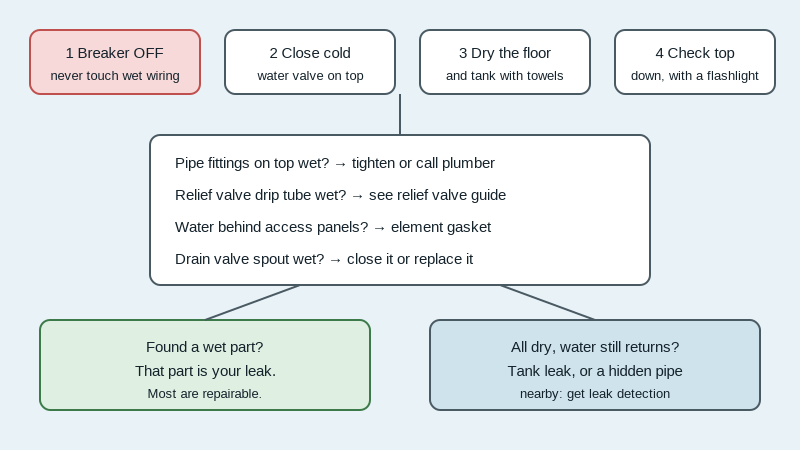
- First, turn off the breaker for the water heater and close the cold water valve on top. Never touch wiring, the panel or the heater if water is near electrical parts and the power is still on.
- If every part is dry and water keeps coming back from under the tank, the tank has probably rusted through and needs replacing.
- If the heater is dry but the floor around it stays wet, the water may be coming from a hidden pipe nearby, not the heater.
If your electric water heater is leaking from the bottom, start with safety, then work from the top of the tank down. Gravity sends water from almost any leak point to the base, so a puddle under the heater tells you that something is wrong, not where. In many Lynnwood homes the heater sits in a garage, a utility closet or a crawl space, and a slow leak can soak flooring or framing before anyone notices. The checks below take about 20 minutes and usually point to one of five or six sources.
First, make it safe
- Turn off the power at the breaker. Electric tank heaters usually run on a 240-volt double breaker labeled "water heater" in your electrical panel. Switch it off. If water is near the panel, the outlet area or the heater's wiring and you can't reach the breaker without standing in water, stay out and call an electrician or your utility.
- Close the cold water valve. It is on the cold pipe going into the top of the heater. If there isn't one or it won't turn, use the main water shut-off valve for the house.
- Protect the area. Move boxes and anything else off the floor, put down towels, and set a shallow pan or bucket under the drip if you can.
- Keep the power off until the tank is full again. If you drain any water, the heating elements must be fully covered before you turn the breaker back on. Running an electric element in an empty or half-empty tank can burn it out in seconds.
Why an electric water heater leaks from the bottom
Electric water heaters don't have a burner or a flue, so most of the causes are parts you can see once you look closely. Here are the usual suspects, from the most common to the most serious.
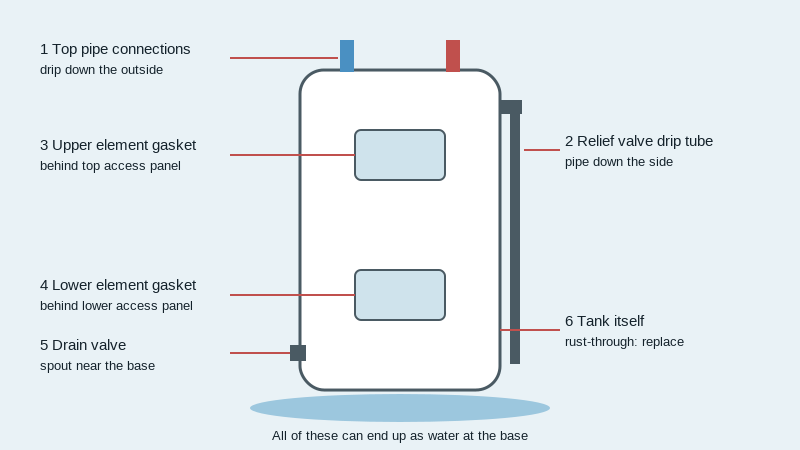
- Heating element gasket. Most electric tanks have two elements, an upper and a lower one, each behind a small metal access panel on the side. Each element screws or bolts into the tank with a rubber gasket. When that gasket ages, flattens or the element loosens, water seeps out behind the panel, soaks the insulation, and runs down inside the jacket to the floor. A leak at the lower element often looks exactly like the tank leaking from the bottom.
- Drain valve. The drain valve near the base is often plastic. It can drip from the spout if it wasn't closed all the way after flushing, if sediment holds it open, or it can leak where it threads into the tank.
- Relief valve drip tube. The temperature and pressure (T&P) relief valve is on the top or side, with a pipe that runs down the side and ends a few inches above the floor. Water coming out of that pipe means the valve is releasing pressure or heat, or the valve itself is worn.
- Pipe connections on top. A slow drip from the hot or cold fittings on top runs down the tank and pools at the base.
- Condensation. According to manufacturer A.O. Smith's guide on why a water heater leaks, cold water in the tank can cool the outside of an electric heater enough to cause condensation in a warm room, and this usually stops once the heater warms up. It is less common on electric tanks than on gas ones, and it shouldn't make a steady puddle.
- The tank itself. Over the years, sediment and corrosion eat through the steel. Once the tank is leaking from the bottom seam or the base, it can't be patched and needs replacing.
How to find the source: a 20-minute check
With the breaker off and the cold valve closed, dry everything with towels so you can see fresh water. Then check from the top down with a flashlight.
- Top connections. Run a dry paper towel around the hot and cold pipe fittings on top. Any wetness there means the leak starts above the tank.
- Relief valve and drip tube. Touch the end of the drip tube. If it is wet or dripping, read our guide to a water heater relief valve leaking. Never cap or plug that tube.
- Element access panels. With the power off, remove the screws on the upper and lower access panels and gently pull back the insulation. Don't touch the wire terminals. Rust streaks, wet insulation or crusty white buildup around the element mean the element gasket is the likely leak.
- Drain valve. Check the spout and the spot where the valve meets the tank. Make sure the handle is fully closed (turned clockwise), and look at whether the drip is from the spout or the threads.
- The base. If all the parts above are dry, leave a dry paper towel under the tank and check it after an hour or two. Water seeping from under the jacket, especially if it is rusty, points to the tank.
Electric water heater leak: what each sign usually means
| What you see | Likely source | Usually |
|---|---|---|
| Wet insulation or rust behind the lower access panel | Lower heating element gasket | Repairable: new gasket or element |
| Wet behind the upper panel, streaks down the side | Upper element gasket | Repairable |
| Drip from the drain valve spout | Valve not fully closed or worn | Close it, or replace the valve |
| Water at the end of the pipe down the side | Relief valve releasing or worn | Find the cause before replacing |
| Wet fittings on top | Loose or corroded connection | Repairable |
| Rusty water seeping from under the tank | Corroded tank | Replace the water heater |
| Heater dry, floor still wet | Hidden supply pipe or drain nearby | Leak detection |
New water heater leaking from the bottom?
A brand new electric water heater leaking from the bottom is frustrating, but the tank is rarely the problem. On a new install, check these first: the drain valve (it can be bumped or left slightly open), the new pipe connections on top, the element access panels (an element can work loose), and the relief valve drip tube. If the drip tube runs after every heating cycle, the cause may be high water pressure or thermal expansion in the home's plumbing, not a bad valve. Don't remove anything on a new heater yourself. Turn the breaker off, take photos, and call the installer, because a new heater is usually covered by the installer's work and the manufacturer's warranty. Our guide to a new water heater leaking covers this in more detail.
How urgent is it?
A few drops from a drain valve or a damp spot behind an access panel isn't an emergency, but it shouldn't wait weeks. Water inside the jacket can damage the thermostat and wiring, and a slow leak in a closet or crawl space can lead to rot and mold.
Treat it as urgent if:
- Water is near the electrical panel, outlets or the heater's wiring
- The puddle keeps growing after you close the cold water valve
- The water is rusty, or it seeps from under the tank jacket
- The heater is in a closet or upstairs, where a leak damages ceilings below
Once the breaker is off and the cold valve is closed, a leaking tank only loses the water already inside it. A tank that has rusted through can fail suddenly, so plan to replace it soon rather than keep using it.
When the water isn't coming from the heater
Water heaters often sit next to supply lines, a washing machine or a floor drain, and pipes run through the wall behind them. Sometimes the heater gets blamed for water that comes from somewhere else: a pinhole leak in a pipe, a supply line inside the wall, or a line under the slab.
A quick meter check helps. Turn off every fixture in the house and watch the leak indicator on your water meter. If it keeps moving while the heater's cold valve is closed and the heater area is dry, water is escaping somewhere else. Our guide on how to check your water meter for leaks walks through it. That is when professional hidden water leak detection makes sense.
What a water heater leak detection visit involves
A leak detection technician doesn't replace water heaters. The goal is to find exactly where the water comes from, so you don't replace a heater that wasn't leaking, or replace one and still have a wet floor. A typical water heater leak detection visit can include:
- A close look at the fittings, valves, element panels and drip tube
- Moisture meter readings on the floor, walls and framing around the heater
- Thermal imaging to follow warm water from hot lines
- Meter and pressure tests to check whether a hidden pipe is losing water
Once the source is confirmed, you know whether you need a plumber for a part, a new water heater, or a pipe repair somewhere else. For the same checks on a gas unit, see our guide to a gas water heater leaking from the bottom, and for an overview of both, our main guide on a water heater leaking from the bottom.
FAQ
Why is my electric water heater leaking from the bottom?
The most common causes are a leaking lower heating element gasket, a drain valve that is loose or not fully closed, the relief valve drip tube, or a pipe connection on top dripping down the side. If all of those are dry and water still appears under the tank, the tank has probably corroded through.
Can a heating element gasket make it look like the tank is leaking?
Yes. Water from the lower element gasket soaks the insulation behind the access panel and runs down inside the jacket, so it shows up at the base. Turn off the breaker, remove the lower access panel and look for wet insulation or rust around the element.
Is an electric water heater leaking from the bottom dangerous?
It can be, because water and electricity don't mix. Turn off the breaker before you touch the heater. If water is near the panel or wiring and you can't reach the breaker safely, stay out of the water and call an electrician.
Why is my new water heater leaking from the bottom?
On a new heater, the drain valve, the new pipe connections, a loose element or the relief valve drip tube are more likely than a bad tank. Turn off the breaker, take photos and call the installer before removing anything, so the warranty isn't affected.
Can I keep using an electric water heater that is leaking?
If it is a drain valve or a gasket, you may be able to use it for a short time with the area dry and checked often, but get it repaired soon. If the tank itself is leaking, turn off the breaker and plan a replacement, because a rusted tank can fail with little warning.
What if my water heater is dry but there is water on the floor?
Then the water may come from a nearby supply pipe, a washer hose, a drain or a pipe in the wall or slab. Do a water meter test with all fixtures off. If the meter moves, a hidden leak is likely and professional leak detection can find it.
Next step
Turn off the breaker, close the cold water valve and do the 20-minute check from the top down. If you can't find the source, the heater looks dry but the floor stays wet, or the meter keeps moving, call Leak Detection Lynnwood at (425) 276-0836 and ask about same-day availability. You can also learn more about our leak detection in Lynnwood and nearby Snohomish County communities.
Think you have a hidden leak?
Call and describe the symptoms. You will get straight answers about what testing involves and what it may cost before anyone visits.